The 8 Best Hair Growth Products for Women in 2027, Ranked by What the Trials Actually Show
Only one active ingredient is FDA-approved to regrow hair in women. Here is how it compares with prescription pills, laser caps, PRP injections and supplements, and how long each takes to show results.
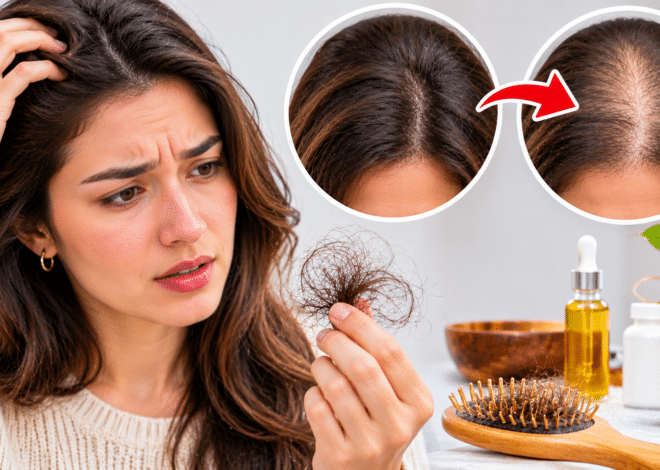
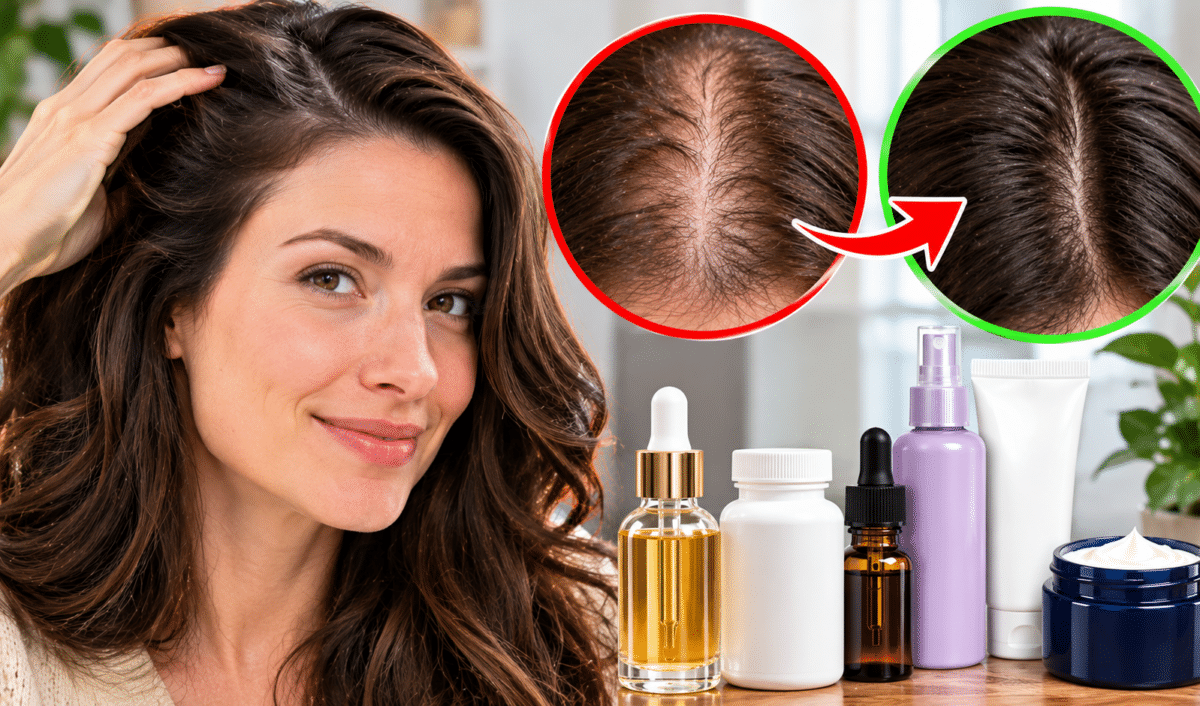
Your part looks wider in bathroom lighting. Your ponytail feels thinner. A shopping app offers thousands of serums, gummies and caps. The reality is narrower and more useful: only a handful of hair growth options for women have been tested in randomized trials, and they differ widely in strength, cost, convenience and how long you must wait before you can judge them. This guide ranks eight of them by the quality of their evidence, not by marketing.
Why Thinning Hair Is Far More Common in Women Than Most Assume
Female pattern hair loss, the medical term for hereditary thinning, is the most common cause of hair loss in adult women. An analysis of more than a million users presented at the 2025 American Academy of Dermatology Innovation Academy estimated that androgenetic alopecia affects 30 million women in the United States. The same analysis found women reported more mild thinning than men, 46.8% versus 34.1%, while severe loss was closer between the sexes at 10.7% versus 12.5%.
Age is the biggest driver. A U.S. study of 1,008 women, summarized in a 2015 review in Anais Brasileiros de Dermatologia, found a prevalence of 3% in women in their twenties rising to 32% in their eighties, with 19% overall. An Australian study of 717 women found 13% in the third decade and 54% in the eighth. A UCLA research letter put the figure at approximately 40% of women by age 50.
Prevalence in women, percent. Sources: U.S. study of 1,008 women (2001) and Australian study of 717 women (2005), as summarized in Anais Brasileiros de Dermatologia (2015); UCLA research letter (2015). Different study populations; not directly comparable.
Before You Buy: Thinning, Shedding and Breakage Are Not the Same Problem
Every product in this ranking targets female pattern hair loss: gradual thinning over the crown and part, with the front hairline usually preserved. That is different from telogen effluvium, a sudden increase in shedding a few months after a trigger such as illness, childbirth, crash dieting or a stressful event, which often resolves on its own. Breakage from heat or bleaching and the patchy loss of alopecia areata are different problems again.
The American Academy of Dermatology notes that hairstyles and products can themselves contribute to hair loss in women, and that the pattern and location of loss often point to the diagnosis. A growth serum cannot fix iron deficiency, thyroid disease or traction from tight braids. If your loss is sudden, patchy, itchy, painful or accompanied by other symptoms, see a clinician before spending on any product below.
What We Know
- Topical minoxidil is the only FDA-approved drug for female pattern hair loss.
- Once-daily 5% foam and twice-daily 2% solution both regrew hair in trials.
- Low-dose oral minoxidil and spironolactone are widely prescribed off-label.
- Several laser devices are FDA-cleared and have sham-controlled trials.
- Most treatments need around 6 months before results can be judged.
What Is Still Unclear
- Whether extended-release oral minoxidil will win FDA approval; phase 3 data in women is expected in the first half of 2027.
- The best PRP preparation, dose and schedule; protocols vary widely.
- How supplements compare with minoxidil; most trials are company-funded.
- Long-term results beyond 1 to 2 years for most newer options.
The Ranking: Eight Options, From Strongest Evidence to Supporting Role
The order reflects the strength of clinical evidence in women, regulatory status and practicality. No product paid for placement. Brand names are mentioned only where a specific product was the one studied.
- 1OTC
Women’s 5% minoxidil foam, once daily
The best-supported starting point. In a phase III trial of 404 women published in the Journal of Drugs in Dermatology in 2016, once-daily 5% foam regrew 10.9 hairs per square centimeter more than placebo foam at 12 weeks and 9.1 more at 24 weeks. The foam formula skips propylene glycol, a common cause of scalp itch with older solutions.
- FDA-approved 2014
- Once daily
- Judge at 6 months
- Lifelong use
- 2Rx
Low-dose oral minoxidil
The fastest-growing prescription choice. Doses of 0.25 mg to 5 mg a day are used off-label; a 2024 randomized trial found 1 mg oral minoxidil about as effective as topical treatment for hair diameter at 6 months. Common side effects include unwanted facial or body hair and, less often, ankle swelling or a faster heartbeat, so a prescriber should check blood pressure.
- Off-label
- 0.25 to 5 mg daily
- One pill
- Needs monitoring
- 3Rx
Spironolactone
An anti-androgen pill often added for women with hormonal patterns. A 2023 meta-analysis found 56.6% of women improved overall, rising to 65.8% when it was combined with other therapy. It must not be used during pregnancy, so prescribers typically require reliable contraception.
- Off-label
- Often 100 mg daily
- Best combined
- Not in pregnancy
- 4OTC
2% minoxidil solution, twice daily
The original FDA-approved option for women and still a valid one. In the same 2016 head-to-head trial, twice-daily 2% solution added 24.2 hairs per square centimeter from baseline at 24 weeks, versus 23.9 for once-daily 5% foam. The trade-off is twice the applications and more reports of itch.
- FDA-approved
- Twice daily
- Budget pick
- More scalp itch
- 5Device
FDA-cleared laser cap or helmet
Low-level light therapy at red wavelengths. In a double-blind trial in Lasers in Surgery and Medicine, women using a 655 nm helmet saw a 48.07% increase in hair counts versus 11.05% with a sham device. FDA clearance confirms safety and substantial equivalence, not that every model works equally well.
- FDA-cleared
- Drug-free
- Several sessions a week
- Large upfront cost
- 6Clinic
Platelet-rich plasma injections
Your own concentrated platelets injected into the scalp. In a 30-woman randomized trial in the Journal of the American Academy of Dermatology, density rose 105.9 hairs per square centimeter with PRP at week 24 versus a fall of 52.4 with saline. Other trials were weaker, and protocols are not standardized.
- In-office
- 3 to 4 monthly sessions
- Maintenance needed
- Out-of-pocket
- 7Supplement
Clinically tested hair supplements
Nutrafol is the most-studied brand. A 2026 open-label study in Dermatology and Therapy of 180 women, 150 of whom completed it, reported hair growth rates up 18.6% to 36.7% from baseline across four formulas. The study had no placebo group and was company-sponsored. Supplements are not FDA-reviewed for effectiveness.
- Not FDA-approved
- Daily capsules
- Add-on role
- Check biotin content
- 8Shampoo
Ketoconazole shampoo
An anti-dandruff ingredient with modest hair benefits. A 2020 systematic review in Dermatologic Therapy found studies reporting thicker hair shafts and a higher share of growing hairs, but evidence is small. It works best as a supporting step for women with an oily or flaky scalp. The 1% strength is sold over the counter; 2% needs a prescription.
- 1% OTC, 2% Rx
- 2 to 3 washes a week
- Adjunct only
- Low risk
How the Numbers Stack Up Side by Side
Trials use different measures and time points, so the charts group similar results and should not be read as head-to-head contests.
Hairs per square centimeter. Sources: Blume-Peytavi et al., J Drugs Dermatol (2016); phase III foam vs vehicle trial, J Drugs Dermatol (2016); Veradermics Study 207 topline, reported by Dermatology Times (July 2026). Different trials; not head-to-head.
Gains “from baseline” include any placebo effect; gains “above placebo” isolate the drug’s effect.
Why the placebo-adjusted number is smaller
Hair counts often rise in placebo groups too, as participants follow study routines and are measured carefully. That is why the 5% foam figure drops from about 24 hairs per square centimeter measured from baseline to about 9 when compared against placebo foam. When a brand quotes only before-and-after numbers with no comparison group, assume part of the gain would have happened anyway.
Percent of participants. Sources: Cureus meta-analysis (2023); randomized trial in premenopausal women using 3% minoxidil in both arms (2025); Lasers in Surgery and Medicine helmet trial (2014, percent hair count increase). Indicative comparison only.
The New Pill That Could Change Women’s Treatment in 2027
One development is worth watching. Veradermics is testing VDPHL01, an extended-release oral form of minoxidil designed specifically for pattern hair loss. In its phase 2 Study 207, reported by Dermatology Times in July 2026, women taking 4.5 mg once or twice daily gained 22.7 and 23.3 non-vellus hairs per square centimeter at 6 months. Among those women, 88.9% on once-daily and 90.0% on twice-daily dosing said their coverage improved, and the company reported no treatment-related serious adverse events and no cardiac events of special interest.
The study was small, with 28 women, and open-label, meaning everyone knew what they were taking. The registration-directed phase 3 Study 306 in women is ongoing, with topline results expected in the first half of 2027. Dermatology Times notes that no FDA-approved oral prescription treatment currently exists for female pattern hair loss. Until approval, existing low-dose oral minoxidil prescribed off-label remains the practical option.
Minoxidil began as a blood pressure pill approved more than 40 years ago. Unexpected hair growth in patients led to the topical version. Prescribers still check blood pressure and heart rate at low doses.
Your Six-Month Timeline With Almost Any Product
Hair grows in cycles, and treatments work by lengthening the growth phase and thickening miniaturized follicles. That biology sets the pace. In the 2015 rosemary oil versus 2% minoxidil trial, neither group showed a significant gain at 3 months; both did at 6. The timeline below is indicative, drawn from trial schedules and common dermatology guidance.
- Weeks 2 to 8Temporary shedding can increase on minoxidil as old hairs make way for new ones. This is commonly reported and usually settles.
- Month 2In the oral extended-release trial, investigators rated 67.2% of participants improved at this earliest check.
- Month 3Many trials first measure gains here; the 5% foam trial showed 10.9 extra hairs per cm2 over placebo at 12 weeks.
- Month 6The standard point to judge any product. Most pivotal trials ran 24 weeks.
- Month 12 and beyondFuller density for responders; stopping minoxidil generally lets gains fade over the following months.
A Practical Comparison Table
Costs vary sharply by brand, pharmacy and clinic, so the table compares access, routine and evidence instead of prices.
| Option | Access | Routine | Key trial result in women | First fair check |
|---|---|---|---|---|
| 5% minoxidil foam | Over the counter | 1 time daily | +9.1 hairs/cm2 vs placebo, 404 women | 24 weeks |
| Low-dose oral minoxidil | Prescription | 1 pill daily | Similar to topical at 1 mg, 6 months | 6 months |
| Spironolactone | Prescription | 1 to 2 pills daily | 56.6% improved, meta-analysis | 6 months |
| 2% minoxidil solution | Over the counter | 2 times daily | +24.2 hairs/cm2 from baseline | 24 weeks |
| Laser cap or helmet | Over the counter, FDA-cleared | Sessions several days a week | 48.07% vs 11.05% sham | 16 to 26 weeks |
| PRP injections | Clinic | 3 to 4 sessions, then maintenance | +105.9 vs -52.4 hairs/cm2, 30 women | 24 weeks |
| Hair supplement | Over the counter | Daily capsules | Growth rate +18.6% to 36.7%, open-label | 6 months |
| Ketoconazole shampoo | 1% OTC, 2% Rx | 2 to 3 washes weekly | Thicker shafts in small studies | 6 months |
Trial results come from different studies and measures and are not directly comparable. Sources listed at the end of the article.
A Worked Example: What a Fair Trial Really Takes
Consider a hypothetical woman who starts once-daily 5% foam on January 1. The arithmetic shows why patience decides the outcome.
Six months of 5% foam, by the numbers
- Applications at once daily for 182 days182
- Same period on twice-daily 2% solution364
- Applications saved by choosing foam182
- Possible early shedding windowWeeks 2 to 8
- Trial average gain over placebo at 24 weeks9.1 hairs/cm2
- Date of first fair verdictAbout July 1
Hypothetical example. 182 days at 1 application equals 182; at 2 applications equals 364. Individual response varies; trial averages do not predict any one person’s result.
- Quitting minoxidil during the early shedding phase, just before it starts to work.
- Judging a product at 6 to 8 weeks; most trials measure at 24 weeks.
- Believing rosemary oil “matches minoxidil”: the 2015 trial enrolled 100 men, compared it with the weaker 2% strength and had no placebo group.
- Taking high-dose biotin without telling a doctor; the FDA has warned biotin can distort some lab tests.
- Stacking five new products at once, then not knowing which one helped or irritated.
When to Move From the Drugstore to a Dermatologist
This indicative ladder, based on common dermatology practice, helps decide when to seek a diagnosis.
Gradual thinning at the part with no other symptoms: a fair trial of 5% foam is reasonable.
Little change despite daily use: ask about oral minoxidil or spironolactone.
Sudden heavy shedding after illness, childbirth or stress: get checked for triggers such as iron or thyroid problems.
Patches, scalp pain, scaling, burning or irregular periods with acne: see a clinician promptly.
Spironolactone and oral minoxidil are prescription drugs used off-label for hair. Spironolactone is not safe in pregnancy, and topical minoxidil is not recommended during pregnancy or breastfeeding either.
Frequently Asked Questions
What is the most effective hair growth product for women?
Topical minoxidil remains the best-supported option and the only drug FDA-approved for female pattern hair loss. Once-daily 5% foam is the most convenient form. Prescription low-dose oral minoxidil and spironolactone are common next steps when topical treatment is not enough.
Is 5% minoxidil safe for women?
Yes. The FDA approved 5% minoxidil foam for women in 2014 for once-daily use. Possible side effects include scalp irritation, temporary shedding and unwanted facial hair. It is not recommended during pregnancy or breastfeeding.
How long does it take for hair growth products to work?
Most need about 6 months of consistent use before results can be judged. Some people notice changes at 2 to 3 months, but pivotal minoxidil trials measured their main result at 24 weeks.
Does low-dose oral minoxidil work for women?
Studies suggest it does. A 2024 randomized trial found 1 mg daily about as effective as topical minoxidil at 6 months. It is prescribed off-label, so a clinician should monitor blood pressure, heart rate and side effects such as unwanted hair growth.
Do hair growth supplements like Nutrafol work?
Some company-funded trials report improvement, including a 2026 study of 180 women showing faster growth rates over 6 months, but it had no placebo group. Supplements are best seen as an add-on, and any biotin they contain can interfere with lab tests.
Does rosemary oil regrow hair like minoxidil?
The evidence is limited. A 2015 trial in 100 men found rosemary oil similar to 2% minoxidil after 6 months, but it had no placebo group and has not been replicated. It may be a low-risk add-on but is not a proven replacement.
Are laser caps for hair loss worth it?
FDA-cleared laser devices have sham-controlled trials showing gains, including one where women’s hair counts rose 48.07% versus 11.05% with a sham device. They require regular sessions and an upfront purchase, and results vary by device.
When should a woman see a dermatologist about hair loss?
See a dermatologist if loss is sudden, patchy, painful or scaly, if it follows a major illness or childbirth, or if 6 months of daily over-the-counter minoxidil has not helped. A diagnosis rules out treatable causes and opens prescription options.
The Short Version
For women with pattern thinning in 2027, start with once-daily 5% minoxidil foam, the only FDA-approved option, and give it a full 6 months. If that is not enough, low-dose oral minoxidil and spironolactone are well-studied prescription add-ons. FDA-cleared laser devices and PRP have smaller but supportive trials, while supplements and ketoconazole shampoo play supporting roles. Watch for phase 3 results on an extended-release minoxidil pill, expected in the first half of 2027. Sudden, patchy or painful loss needs a dermatologist, not a new serum.

Omisha is a health writer passionate about turning complex medical research into clear, actionable content readers can trust. She covers everything from nutrition and mental wellness to chronic disease management, always grounding her work in credible science and real-world relevance. When she's not writing, she's usually reading up on the latest health studies or exploring new wellness trends to write about next.