Neuvera PeptiLIFT Facial Spray: What the Peptide Mist Claims, What the Evidence Shows and What to Check
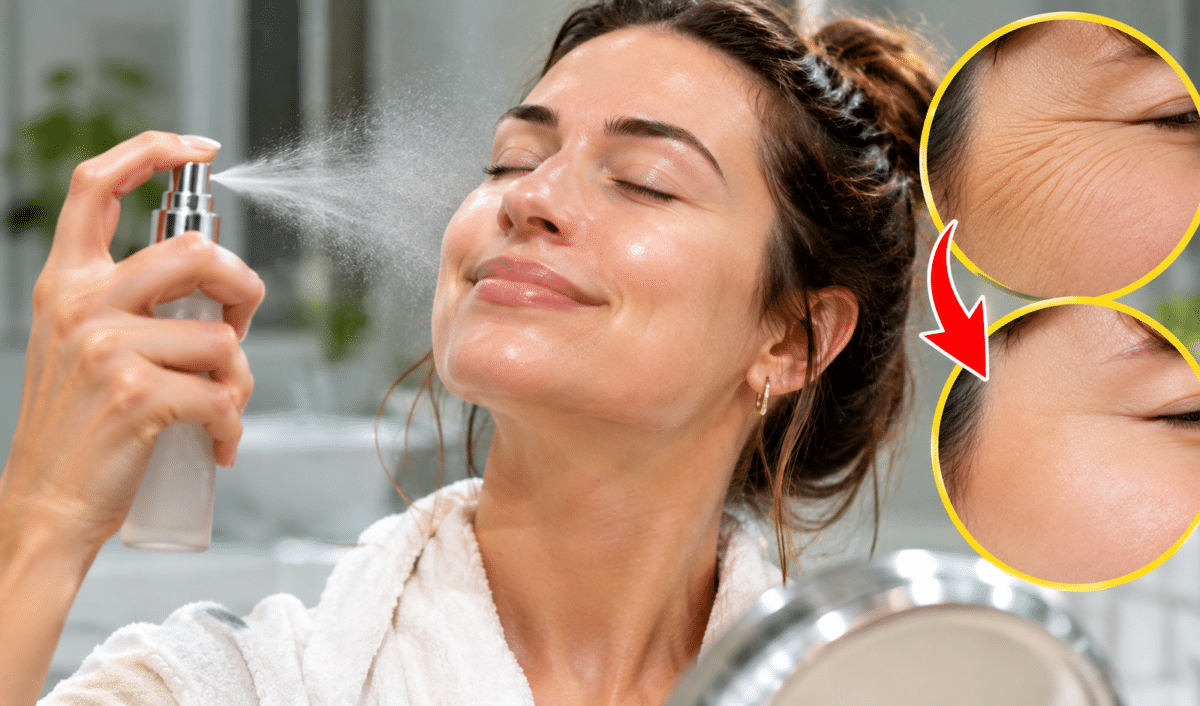
New Jersey-based Neuvera is marketing PeptiLIFT, a facial prep spray built around its patented Peptide G63, as interest in peptide skincare surges. Here is what is confirmed, what has not been published, and how to judge it before buying.
Peptides have become one of the most talked-about words on the skincare shelf, promising firmer, smoother skin without the sting of retinol. Into that moment comes PeptiLIFT, a lightweight facial spray from Neuvera, a Hanover, New Jersey, company that also sells oral peptide strips. Its announcements promise a “firmer, more toned appearance” and cite high absorption figures. Before spending $34 to $49 on a bottle, it helps to separate three things: what the company says, what peptide science actually supports, and what U.S. law requires a cosmetic to prove. They are not the same.
What Neuvera Has Actually Announced
The company’s announcements have arrived as a series of releases distributed through the PressCable newswire. A June 3, 2026, release introduced PeptiLIFT as a peptide-based topical line using Neuvera’s patented “Peptide G” portfolio, developed by scientist Sean Shelby, and aimed at adults 30 and older. That release did not specify product formats, list ingredients or cite clinical studies.
A September 14, 2026, release clarified the product: PeptiLIFT is a peptide facial prep spray formulated with patented Peptide G63 “to refresh the skin and support a firmer, more toned appearance,” for all skin types. Neuvera’s product page describes it as a lightweight hydrating facial toner that prepares clean skin for serums and moisturizer. The company also sells a body lotion, PeptiPROTECT, and bundles the two as a face and body duo; its site notes that PeptiPROTECT is not sunscreen and does not provide SPF.
- Jun 3, 2026PeptiLIFT line introduced with Peptide G technology
- Jul 22, 2026Pepti-REGIME two-step face and body bundle launched
- Aug 17, 2026Company guide comparing peptides and retinol released
- Sep 14, 2026PeptiLIFT announced as a facial prep spray with Peptide G63
- Nov 2026Peptide skincare remains a top consumer trend
What We Know and What Is Still Unclear
What We Know
- PeptiLIFT is sold as a cosmetic facial prep spray, not a drug or supplement.
- It contains Neuvera’s patented Peptide G63, per the company.
- It is sold direct to U.S. consumers for $49, or $34.30 by subscription.
- Neuvera’s blog lists agave leaf, prickly pear and aloe vera alongside the peptide.
- Cosmetics need no FDA approval before they are sold in the U.S.
What Is Still Unclear
- The full ingredient list and peptide concentration in each bottle.
- Any independent, peer-reviewed clinical results for PeptiLIFT.
- How the “absorption” figures were measured; numbers differ between sources.
- The amino acid sequence or mechanism of Peptide G63.
Peptides 101: Why the Ingredient Is Everywhere
Peptides are short chains of amino acids, the building blocks of proteins such as collagen. In skincare, they are usually grouped into four families: signal peptides that may prompt skin cells to make collagen, carrier peptides that deliver trace minerals such as copper, neurotransmitter-inhibitor peptides marketed for expression lines, and enzyme-inhibitor peptides. A 2017 review in the journal Cosmetics noted that some peptides have proven efficacy in clinical skin trials, while study results for others “are sparse, or have not been published in scientific journals.”
Consumer interest has jumped. Neuvera’s own September release cites LookFantastic’s 2026 beauty trend report, which found peptides were the fastest-growing trending skincare ingredient in 2025, with searches up 79%. Major brands now sell peptide mists, serums and creams, and a dermatology news outlet, Healio, cautioned in July 2026 that evidence on the safety and efficacy of many peptides “remains limited.”
Number of participants in selected published topical peptide studies, each lasting 12 weeks. Sources: International Journal of Cosmetic Science (2005), Journal of Clinical and Aesthetic Dermatology (2021), Journal of Cosmetic Dermatology (2019).
Even the best-known peptide studies are small compared with drug trials.
The best-known example
The most-cited peptide, palmitoyl pentapeptide-4, sold under the trade name Matrixyl, was tested in a 2005 double-blind, placebo-controlled, split-face study of 93 women aged 35 to 55. Over 12 weeks, it produced measurable improvements in wrinkles compared with the same moisturizer without the peptide. That is genuine evidence, but it applies to that specific peptide at that concentration. A different, proprietary peptide such as Peptide G63 needs its own data.
Reading the Numbers in the Marketing
Several percentages appear in Neuvera’s materials. None comes with a published method, sample size or independent verification, which makes them hard to evaluate. The chart collects them so readers can see the spread.
Figures as stated by the company or cited in its releases, June to September 2026. Not independently verified.
The two absorption figures differ, and neither release explains what was absorbed, into which skin layer, or how it was measured.
“Absorption” is a slippery word in skincare. A product can be absorbed in the sense that it disappears from the skin’s surface without the active ingredient reaching the deeper dermis, where collagen is made. Without a description of the test, a high absorption percentage says little about whether the product changes how skin looks over weeks or months.
Does the spray format matter?
Facial mists and toners are mostly water-based, which makes them light and easy to layer, but they also spread a thin film of product across the face. Leave-on serums and creams usually deliver more of an active ingredient per application and keep it on the skin longer. That does not make a mist ineffective; it means the peptide concentration and how the mist is followed, ideally by a moisturizer that seals it in, matter more than the bottle’s shape. Neuvera positions PeptiLIFT as a first step before other products rather than a standalone treatment, which is consistent with how mists are typically used.
Neuvera’s June release and blog describe PeptiLIFT as “chemical-free.” Every ingredient, including water, aloe and peptides, is a chemical. The phrase is a marketing term with no regulatory definition, so shoppers should judge a product by its full ingredient list rather than by the label.
Decoding the Label Language
Peptide products share a vocabulary that can sound clinical. The table explains what common terms mean, and what to ask, so the same lens can be applied to PeptiLIFT or any competitor.
| Term you will see | What it means | Regulated definition? | Question to ask |
|---|---|---|---|
| Patented peptide | A patent was granted on a compound or process | Patent, not proof of effect | Is there published skin data? |
| Chemical-free | Marketing phrase; all ingredients are chemicals | No | What is the full INCI list? |
| Clinically validated | Some test was run; design unknown | No | How many people, how long, placebo? |
| 98% absorption | Product left the surface in a test | No | Absorbed where, measured how? |
| Firming or lifting look | Cosmetic appearance claim | Must avoid drug claims | Measured or self-reported? |
| Dermatologist tested | A dermatologist oversaw a test | No | Tested for irritation or results? |
General guidance; FDA treats products intended to change the structure or function of the body as drugs, which is why cosmetic claims refer to the appearance of skin.
How U.S. Law Treats a Peptide Mist
PeptiLIFT is sold as a cosmetic, and U.S. cosmetics do not need FDA approval before they go on sale. The Modernization of Cosmetics Regulation Act of 2022, known as MoCRA, did add new duties. Companies must register manufacturing facilities and list products with FDA, keep safety substantiation, follow good manufacturing practices, and report serious adverse events within 15 business days. FDA also gained authority to order mandatory recalls.
Claims are a separate matter. The Federal Trade Commission requires advertising to be truthful and backed by evidence, and the line between cosmetic and drug depends on intended use: a product promising to build collagen or remove wrinkles could be treated as an unapproved drug, while one promising a “firmer-looking” appearance stays a cosmetic. That is why the PeptiLIFT materials, like most of the industry, speak of supporting the appearance of firmness rather than changing the skin’s structure.
| MoCRA requirement | Deadline or period | Who it protects | What it does not do |
|---|---|---|---|
| Serious adverse event report | 15 business days | Consumers harmed by a product | Does not test product benefits |
| Follow-up medical information | Within 1 year, filed in 15 business days | Ongoing safety monitoring | Does not cover mild reactions |
| New facility registration | Within 60 days | Traceability and inspections | Is not product approval |
| New product listing | Within 120 days of marketing | FDA visibility of products | Does not verify claims |
| Adverse event records | Kept for 6 years | Investigations and recalls | Records are not public by default |
Source: FDA MoCRA overview and law firm summaries (King and Spalding, Cooley, Loeb and Loeb). Advertising claims are policed separately by the Federal Trade Commission.
How the Price Compares With Other Peptide Products
PeptiLIFT sits in a crowded field. The comparison below uses listed retail prices and sizes to calculate cost per milliliter. Product types differ, from mists to serums and creams, so this compares price, not performance.
Dollars per ml, calculated from retailer and brand listings viewed November 2026. Prices change frequently; indicative only.
A year of PeptiLIFT, two ways
- Hypothetical use: one 60 ml bottle every 2 months6 bottles a year
- At list price, 6 times $49$294
- With subscription, 6 times $34.30$205.80
- Annual saving from subscription$88.20
- Cost per day at subscription price (365 days)about 56 cents
Hypothetical usage rate; Neuvera does not state how long a bottle lasts. 6 times 34.30 equals 205.80; 205.80 divided by 365 equals about 0.56.
Should You Try It? A Four-Step Decision Ladder
The ladder below offers a practical framework for deciding whether any new peptide product, including PeptiLIFT, fits your routine. It is general guidance, not a product endorsement.
Sunscreen of SPF 30 or higher daily and a basic moisturizer already in place; peptides add little without them.
Prefer products that name a studied peptide and its concentration, or publish trial data of 12 weeks or more.
Apply to a small area once or twice daily for 7 to 10 days before using on the whole face.
Burning, rash or swelling: stop use, see a clinician, and report serious reactions to FDA MedWatch.
Who should be most careful
Neuvera markets the line as a gentler alternative to retinol, suitable for sensitive or rosacea-prone skin. Gentler is plausible for peptides in general, but plant extracts and fragrance components in any formula can still trigger reactions. People with eczema, rosacea or known allergies, and anyone who is pregnant and adjusting a routine, are best served by checking the full ingredient list with a dermatologist or pharmacist first.
- Read the full ingredient list on the box or product page before buying.
- Check cancellation terms if you choose a subscription discount.
- Give any peptide product at least 8 to 12 weeks before judging results.
- Take dated photos in the same light to track changes objectively.
- Keep retinoids or other actives you already tolerate; peptides can be layered with them.
- Assuming every peptide works like the ones in published trials.
- Treating “patented” as proof that a product works on skin.
- Expecting a mist to match the results of prescription retinoids or procedures.
- Skipping sunscreen, the most proven anti-aging step, while buying actives.
- Confusing cosmetic peptide sprays with injectable or oral peptide products.
The word peptide now covers very different products, from skincare to prescription drugs and loosely regulated wellness products. Neuvera’s site itself notes that PeptiLIFT and PeptiPROTECT are cosmetics for external use, not dietary supplements. A topical cosmetic peptide is intended only to change how skin looks.
Frequently Asked Questions
What is Neuvera PeptiLIFT?
PeptiLIFT is a lightweight facial prep spray from Neuvera, formulated with the company’s patented Peptide G63. It is designed to be used on clean skin before serums and moisturizer and is sold as a cosmetic.
How much does PeptiLIFT cost?
Neuvera’s product page lists PeptiLIFT at $49 per bottle, or $34.30 per bottle with a subscription, a 30% discount. Prices may change.
Is PeptiLIFT FDA approved?
No. Cosmetics in the U.S. do not require FDA approval before sale. Under MoCRA, companies must register facilities, list products and report serious adverse events, but FDA does not verify cosmetic benefits.
Has PeptiLIFT been clinically tested?
We found no published, peer-reviewed clinical trial of PeptiLIFT. The company cites absorption figures of 92.5% and 98% or more, without describing the testing method.
Do peptides in skincare actually work?
Some do. Palmitoyl pentapeptide-4 improved wrinkles in a 12-week trial of 93 women, and reviews find evidence for several peptides. Results depend on the specific peptide, its concentration and formulation.
Are peptides better than retinol?
Retinoids have a larger body of evidence for wrinkles but can irritate. Peptides are generally gentler, with more modest and less consistent evidence. Many dermatologists suggest using both if tolerated.
Can I use a peptide spray with other products?
Yes. Peptide mists are typically applied after cleansing and before serums and moisturizer. Patch test first and follow with daily sunscreen in the morning.
What does Peptide G63 do?
Neuvera describes Peptide G63 as an exclusive cosmetic signaling peptide technology, precision-designed and not harvested from coral. The company has not published its structure or clinical skin data.
The Bottom Line on PeptiLIFT
Neuvera’s PeptiLIFT is a $49 peptide facial prep spray built around the company’s patented Peptide G63, launched through a series of 2026 press releases as searches for peptide skincare rose 79%. It is a cosmetic, so it needed no FDA approval, and no peer-reviewed trial of the product has been published. Peptide science is real, with 12-week studies supporting specific peptides, but those results do not automatically apply here. If you try it, patch test, track results for 8 to 12 weeks, keep sunscreen first, and judge it on your skin rather than the marketing.

Omisha is a health writer passionate about turning complex medical research into clear, actionable content readers can trust. She covers everything from nutrition and mental wellness to chronic disease management, always grounding her work in credible science and real-world relevance. When she's not writing, she's usually reading up on the latest health studies or exploring new wellness trends to write about next.