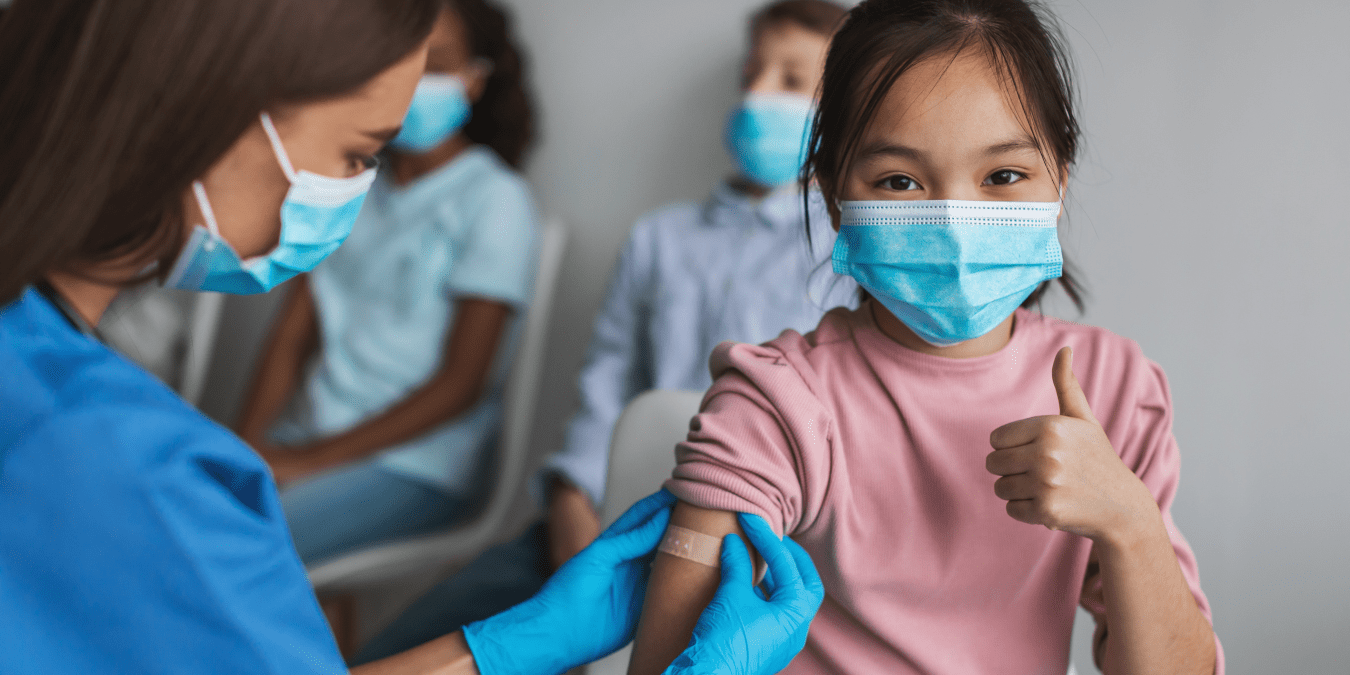
Scientists confirm BA.3.2 “Cicada” targets children more than adults — but does your child’s COVID vaccine still hold up? The answer will surprise you. New lab data reveals a disturbing protection gap, yet doctors say one simple step could still shield your child this spring. Here’s the truth.
If you are a parent in the United States right now, you may have seen alarming headlines about a new COVID-19 variant spreading across the country. Called the “Cicada” variant — officially designated BA.3.2 — it has been detected in wastewater samples across 29 U.S. states and confirmed in more than 23 countries worldwide. What makes this variant particularly unsettling for families is what scientists are now saying: children may be disproportionately vulnerable to catching it.
That raises a question that should be on every parent’s mind: Does the COVID vaccine your child received still protect them against BA.3.2?
The short answer is nuanced — and understanding it matters deeply for the health decisions you make this spring and summer. Here is everything current science tells us, translated clearly for American parents.
What Exactly Is the Cicada Variant?
BA.3.2 is a descendant of the Omicron lineage of SARS-CoV-2 — the same family of variants that has dominated COVID infections since late 2021. It was first identified in a nasal swab from a five-year-old boy in South Africa on November 22, 2024. The World Health Organization (WHO) has designated it a “Variant Under Monitoring,” meaning health agencies are keeping close watch on how it behaves and spreads.
What separates BA.3.2 from many of its predecessors is a dramatic number of genetic mutations. The variant carries approximately 70 to 75 substitutions and deletions in the spike protein — the part of the virus that attaches to human cells — relative to JN.1 and its descendant LP.8.1, which are the antigens used in the 2025–2026 COVID vaccines. To put that in perspective, a typical new variant might present just a handful of genetic changes compared to its ancestor. BA.3.2 shows 53 alterations in its spike protein compared to BA.3 alone, and roughly 70 mutations compared to the original coronavirus identified in 2019.
This is why scientists nicknamed it “Cicada.” Like the insect that disappears underground for years and resurfaces dramatically, this variant emerged quietly in late 2024, simmered for months, and has now reappeared with significant new biological characteristics.
Why Are Children Especially Vulnerable?
This is the finding that has caught scientists’ attention. According to researchers studying BA.3.2, the variant appears to be better at infecting children — not because it inherently targets kids, but because of a specific immunological reality: children’s immune protection from both vaccines and prior infections wanes more quickly than that of adults.
Think of it this way. When a child is vaccinated or infected with COVID-19, their immune system builds a layer of antibody protection. In adults, especially those who have been repeatedly exposed or boosted, that protection tends to remain more durable. In children — particularly those who were vaccinated or infected some time ago and have not had a recent booster or exposure — the antibody levels may have dipped low enough that BA.3.2’s heavily mutated spike protein finds it easier to slip through.
This is not unique to COVID. Many respiratory viruses can more easily reinfect individuals whose immunity has faded, and young children’s immune systems are still maturing. The combination of faster-waning immunity and 70+ novel spike mutations makes BA.3.2 a credible but manageable concern for pediatric health.
It is also worth noting that BA.3.2 currently circulates at relatively low levels in the United States. However, reduced testing since the pandemic’s peak may mean it is more prevalent than current numbers reflect.
What Does the Current COVID Vaccine Actually Target?
To understand vaccine protection, you first need to understand what the 2025–2026 COVID vaccines were designed to fight. The updated formulation — available for children ages 6 months and older — was developed to target LP.8.1, a descendant of JN.1, which has been linked to the majority of U.S. infections in recent months.
The CDC updated its 2025–2026 vaccination schedule with key changes relevant to parents. For children ages 6 to 23 months, only the Moderna (Spikevax) COVID-19 vaccine is now approved — Pfizer-BioNTech’s Comirnaty is no longer authorized for this youngest age group. For children ages 2 and older, vaccination decisions are now based on individual shared clinical decision-making between parents and their pediatricians, with stronger recommendations for children with underlying health conditions, immunocompromised status, or those living in congregate settings.
The American Academy of Pediatrics (AAP) specifically recommends that all children 6 to 23 months old receive the 2025–2026 vaccine, as well as all children who have never been vaccinated against COVID-19 at any age.
- Your Smartwatch Already Knows Something Is Wrong — Why AI-Powered Wearables in 2026 Are Catching Diseases Before Your Doctor Even Schedules Your Appointment

- Your Light Bulb Could Be Making Your Anxiety Worse — or Better: Here’s the Science Behind Colour Therapy

- Your Gut Health Obsession Just Got Scientific Backup — Here’s What Doctors Actually Say Works in 2026

- Your Child’s School Could Be Ground Zero: The Hidden Measles Outbreaks Spreading Across 33 States That Most American Parents Have No Idea About

- Your Blood Pressure Reading Has a “Hidden Number” Doctors Say Most People Ignore
- Your Blood Pressure Is Perfect — But These 7 Silent Clues in Your Blood Work Say Your Arteries May Already Be Clogging

So Does the Vaccine Still Protect Against BA.3.2?
Here is where the science requires careful, honest interpretation — and why this question does not have a simple yes-or-no answer.
The reassuring news: The current COVID-19 vaccine still provides meaningful protection against serious illness, hospitalization, and death — even from BA.3.2. Multiple physicians and infectious disease specialists are in agreement on this point. Dr. Loafman, an infectious disease expert cited in recent reporting, stated clearly: “Yes, the current vaccine offers significant protection against serious illness from all currently circulating COVID strains, which is the primary goal for all vaccines. There is also evidence that vaccinated individuals recover more quickly and are less likely to spread infection.”
Dr. Nachman similarly confirmed that the vaccine continues to protect against Omicron-related strains, of which BA.3.2 is a descendant. Indian physician Dr. Akshay summarized it well from a clinical standpoint: “Vaccines still protect very well against severe illness, hospitalisation, and death. Even if newer variants manage to get past some level of immunity, it does not mean the body is unprepared. The vaccine helps your body respond faster and reduces complications.”
The more cautious news: In terms of antibody neutralization — the immune system’s first line of defense against infection itself — the 2025–2026 LP.8.1-adapted vaccine shows reduced effectiveness against BA.3.2 specifically. A laboratory study of seven variants referenced in the CDC’s own MMWR report found that the current vaccine had the lowest antibody neutralization against BA.3.2 compared to the other six variants tested.
A study published in The Lancet similarly found that vaccine response against BA.3.2 is noticeably weaker than against more closely matched variants like XFG, which remains the dominant circulating strain in the U.S.
What this means practically: your vaccinated child is less likely to be completely shielded from getting the Cicada variant, compared to earlier variants. But they remain substantially protected from the outcomes that matter most — a severe case, a hospitalization, or a life-threatening illness.
Understanding the Spectrum: Infection vs. Severe Disease
One of the most important concepts for parents to internalize is that COVID vaccines have always been primarily designed to prevent severity, not necessarily every infection. This distinction matters enormously when evaluating protection against a highly mutated variant like BA.3.2.
The existing clinical picture supports this framing. Hospitalized cases of BA.3.2 identified so far have overwhelmingly involved older adults with underlying conditions. A young child receiving outpatient care was also among the identified cases — and survived. No data to date indicates BA.3.2 causes more severe disease than the variants currently circulating. From what experts can determine, the “Cicada” strain does not appear to cause higher mortality than previous strains.
Most cases appear mild to moderate, often resembling a flu-like illness — particularly among vaccinated individuals. Symptoms of BA.3.2 are consistent with other recent COVID variants and include: cough, fever or chills, sore throat, nasal congestion, fatigue, headache, and in some cases, gastrointestinal issues like nausea or diarrhea. Loss of smell or taste, while less common than in earlier variants, has also been reported.
What Parents Should Do Right Now
Given this evolving picture, here is a science-informed action plan for American parents in spring 2026:
1. Verify your child’s vaccination status. If your child has not received the 2025–2026 COVID vaccine update, talk to your pediatrician. The AAP strongly recommends it for all children 6 to 23 months and for older children with risk factors. Even partial protection matters significantly when a highly mutated variant is in circulation.
2. Do not skip boosters for high-risk children. If your child is immunocompromised, has a chronic illness, or lives with a family member at high risk for severe COVID, the case for staying current on boosters is especially strong. The Infectious Diseases Society of America (IDSA) specifically recommends COVID vaccination for immunocompromised individuals and their household contacts.
3. Bring back sensible hygiene habits. The CDC continues to recommend hand-washing before meals and after contact with someone who is unwell. In crowded indoor settings — particularly schools and childcare centers where BA.3.2 has higher potential to spread among children — masking remains a personal option worth considering for vulnerable kids.
4. Know the symptoms to watch for. If your child develops a sore throat, cough, congestion, or fever — especially if BA.3.2 is circulating in your area — consider testing them for COVID. Sore throat has been noted as a particularly prominent early symptom in some BA.3.2 cases.
5. Consult your pediatrician, not social media. Shared clinical decision-making is now the formal CDC framework for COVID vaccination for children over 6 months. This means the best vaccination decisions are made in consultation with your child’s doctor, based on their specific health history, age, and local epidemiology.
What Scientists Are Watching Next
BA.3.2 is currently designated a Variant Under Monitoring — not a Variant of Concern — by the WHO, which reflects the fact that while it carries significant mutations, it has not yet demonstrated consistently more severe outcomes or a dramatic surge in hospitalizations. However, the global health community is watching several things carefully:
- Observational data on real-world vaccine effectiveness. The reduced antibody neutralization seen in the laboratory needs to be confirmed or contextualized by real-world outcome data. As the CDC’s own MMWR noted, observational studies are still needed to fully assess how the vaccine-conferred protection plays out in actual populations.
- Spread trajectory. With community transmission now confirmed in 29 states and reduced national testing infrastructure, epidemiologists are working with wastewater surveillance as a key tool to track where and how quickly BA.3.2 is moving.
- Potential for a new vaccine formulation. If BA.3.2 establishes itself as a dominant strain and real-world effectiveness data suggests insufficient protection, vaccine manufacturers and regulatory bodies may need to revisit formulations targeting the BA.3.2 spike protein — much as they have done in previous seasons.
The Bottom Line for American Families
Parenting through yet another COVID variant headline is exhausting — and the fear is understandable. But here is what the totality of current science tells us:
The existing 2025–2026 COVID vaccine does not match up perfectly against BA.3.2 in laboratory neutralization tests. That is a real and honest limitation. But vaccines do not live only in laboratories — they live in the immune systems of real children. And in those real children, the vaccine continues to prime the immune system to recognize related Omicron-lineage proteins, accelerate the immune response, and dramatically reduce the risk of a severe outcome.
Children who are vaccinated and then encounter BA.3.2 may still get sick. But they are far better positioned than unvaccinated children to fight it off quickly, avoid hospitalization, and recover fully.
The Cicada variant is worth monitoring. It is not, based on current evidence, a reason for panic. It is, however, a compelling reminder of why staying current on recommended vaccines — and maintaining an open conversation with your pediatrician — remains one of the smartest things American parents can do to protect their kids in 2026.
This article draws on publicly available guidance from the U.S. Centers for Disease Control and Prevention (CDC), the American Academy of Pediatrics (AAP), the World Health Organization (WHO), and peer-reviewed research published in The Lancet and other scientific journals. It is intended for informational purposes and does not constitute medical advice. Always consult a qualified healthcare provider for decisions specific to your child’s health.

Omisha is a health writer passionate about turning complex medical research into clear, actionable content readers can trust. She covers everything from nutrition and mental wellness to chronic disease management, always grounding her work in credible science and real-world relevance. When she's not writing, she's usually reading up on the latest health studies or exploring new wellness trends to write about next.