Brain Health Diet and Dementia Risk
Which Everyday Foods Do Neurologists Avoid to Protect Their Brains — and How Strong Is the Evidence?
Neurologists say they steer clear of soda, margarine and French fries. Here is what studies of sugary drinks, trans fats and fried food actually found, and what to eat instead.
- 1SodaSugary and diet versions both linked to brain changes
- 2MargarineTrans fats tied to 52% to 74% higher dementia risk
- 3French friesFried food linked to 12% higher anxiety risk
By The Health DeskFact-checked against peer-reviewed studies in Neurology, Stroke, Alzheimer’s & Dementia and PNAS, and Alzheimer’s Association dataUpdated November 16, 2026Scope U.S. adults, diet and brain health
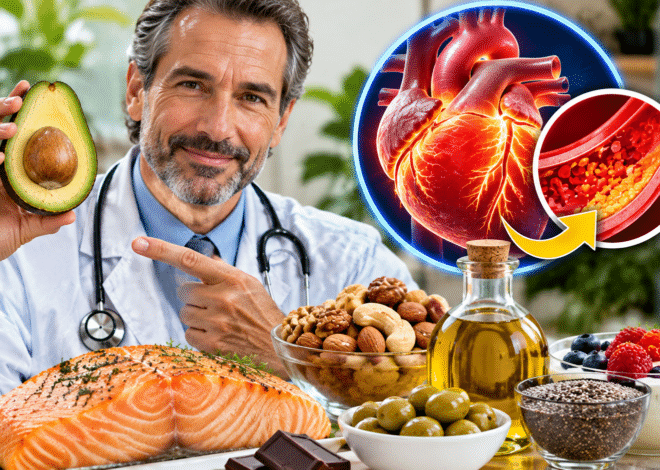
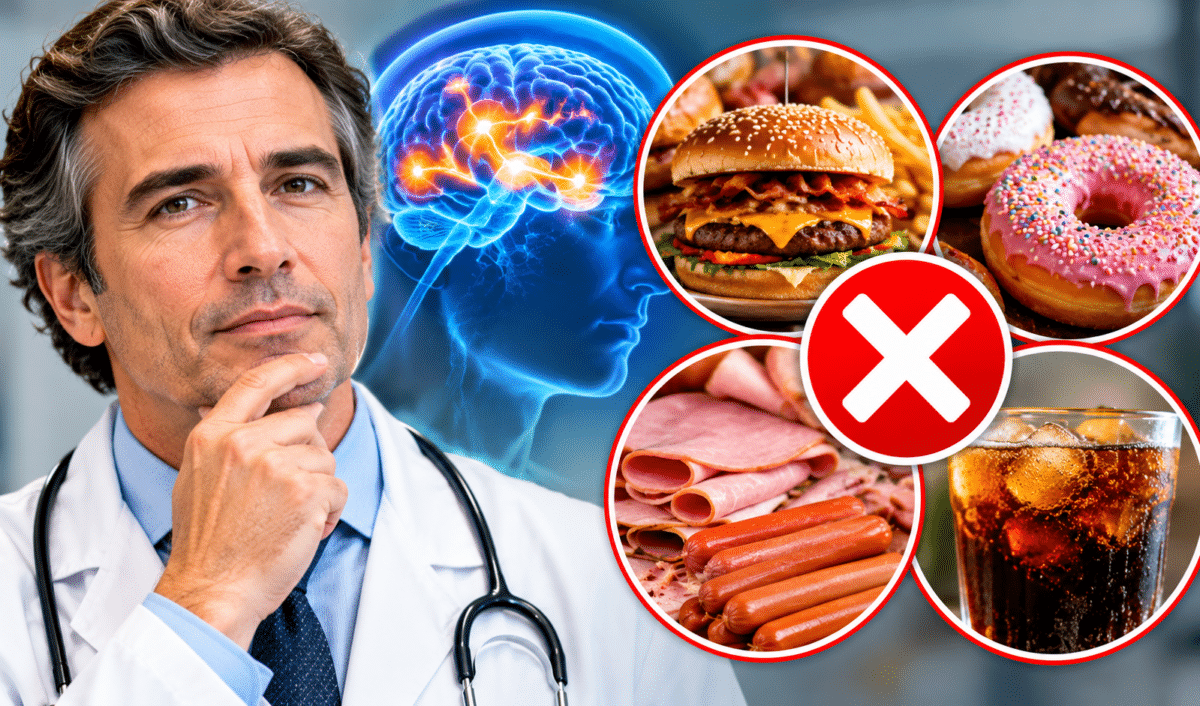
Ask neurologists what they eat and most will mention the usual suspects: leafy greens, berries, fish, nuts. Ask what they skip, and the answers get more specific. In interviews published by HuffPost and BuzzFeed, brain specialists named the everyday foods they avoid or eat only rarely. Three came up with the clearest reasons: soda, margarine and French fries.
That is not just personal preference. Each of those foods has been studied in relation to memory, brain volume, dementia or mood, and the numbers are striking. They are also more nuanced than a “never eat this” list suggests. With 7.4 million Americans aged 65 and older living with Alzheimer’s disease in 2026, according to the Alzheimer’s Association, it is worth understanding what the evidence does and does not show.
What We Know
- Frequent sugary drinks are linked to smaller brain volume and poorer memory.
- High blood trans fat levels are linked to higher dementia risk.
- Frequent fried food is linked to higher anxiety and depression risk.
- The FDA banned added partially hydrogenated oils in 2018.
What Is Still Unclear
- Whether these foods directly cause brain damage or mark other habits.
- How much diet soda’s risk reflects pre-existing health problems.
- Exactly how much is too much for each food.
- Whether cutting them later in life reverses risk.
Why Your Plate Shows Up in Your Brain
The brain is about 2% of body weight yet depends on a dense network of small blood vessels for a constant supply of oxygen and glucose. The neurologists’ reasoning for all three foods traces back to those vessels. Dr. Shae Datta, co-director of the NYU Langone Concussion Center, put it simply: what is bad for the heart’s vessels is also bad for the brain’s vessels.
The 2024 Lancet Commission on dementia supports that link. Its report, published July 31, 2024, identified 14 modifiable risk factors and estimated that addressing them could prevent or delay about 45% of dementia cases worldwide. Several, including high blood pressure, diabetes, obesity and high LDL cholesterol, are directly shaped by diet. The commission estimated that eliminating high LDL cholesterol alone would reduce dementia cases by 7%.
Alzheimer’s Prevalence Rises Steeply With Age
The Three Foods, and the Science Behind Each
Each card below names the expert, the core study and a practical swap. The study figures come from the original research or the institutions’ own releases.
Soda: Sugary and Diet Versions
Dr. Shaheen Lakhan, neurologist“Soda is one of the worst foods for brain health due to the high concentration of simple sugars, which damage the blood vessels supplying the brain,” Lakhan told HuffPost. “Over time, this starves the brain from the very fuels it needs to function, leading to premature dementia and strokes.” He added that sugar acutely causes brain inflammation, irritability, poor mood and sleep disturbances.
The strongest data come from two 2017 Framingham Heart Study papers led by Matthew Pase at Boston University. About 4,000 participants over 30 underwent MRI and memory testing. People who drank sugary beverages more often had poorer memory, smaller overall brain volume and a smaller hippocampus, the brain’s memory center. A companion paper in Stroke found people who drank diet soda daily were almost three times as likely to develop stroke and dementia over 10 years.
- 4,000Framingham participants scanned
- 3xStroke and dementia risk with daily diet soda
- 10 yrsFollow-up for stroke and dementia
SwapWater, sparkling water with citrus, or unsweetened tea. Fruit juice is not a safe substitute; the Framingham work counted it with sugary drinks.
Margarine and Other Trans-Fat Spreads
Dr. Shae Datta, NYU Langone Concussion CenterDatta said she avoids margarine as much as possible because it contains trans fats. “We often hear that trans fats aren’t good for your heart and blood vessels,” she said; the same applies to the vessels of the brain. Trans fats raise LDL cholesterol and lower HDL cholesterol, which damages arteries over time.
A study published in Neurology in October 2019 measured elaidic acid, a blood marker of industrial trans fat, in 1,628 adults in Hisayama, Japan, with an average age of about 70. Over an average of 10 years, 377 developed dementia. After adjusting for blood pressure, diabetes and smoking, the American Academy of Neurology reported that those in the highest trans-fat group were 52% more likely to develop dementia than those in the lowest, and the second-highest group 74% more likely.
- 1,628Adults in the Hisayama study
- 377Developed dementia, 247 Alzheimer’s
- 29.8Cases per 1,000 person-years, highest group
SwapOlive oil, the MIND diet’s main fat, or a soft spread whose ingredient list has no partially hydrogenated oil.
French Fries and Other Deep-Fried Foods
Dr. Pedram Navab, neurologist“A diet that incorporates fatty foods like French fries can damage blood vessels that supply the brain, causing cognitive impairment,” Navab said. He added that such diets reduce the integrity of the blood-brain barrier and lead to damage of neurons in the hippocampus, a region instrumental for learning and memory.
A 2023 study in PNAS by researchers at Zhejiang University followed 140,728 people for 11.3 years. Frequent fried food consumption was linked to a 12% higher risk of anxiety and 7% higher risk of depression, with fried potatoes showing the strongest link. The authors pointed to acrylamide, a compound formed when starchy foods are cooked at very high heat. Lifestyle medicine specialist David Katz cautioned that the link could run the other way, with anxious or depressed people turning to comfort food.
- 140,728People in the PNAS study
- 12%Higher anxiety risk with frequent fried food
- 11.3 yrsAverage follow-up
SwapOven-roasted or air-fried potatoes with olive oil, or a side of beans or greens.
How Much Higher Was the Risk? Findings From the Key Studies
Reading the Numbers Without Panic
All three findings come from observational studies, which track what people eat and what happens to them. They cannot prove that one food caused the outcome. People who drink soda daily or eat fried food often may also exercise less, sleep worse or have conditions such as diabetes that raise dementia risk on their own.
The diet soda finding is a good example. Boston University researchers noted that people who drank diet soda more often were also more likely to be diabetic. The link held even after excluding people with diabetes, but the authors said more research was needed to determine whether, or how, the drinks damage the brain. Some people may switch to diet soda precisely because they already have weight or blood sugar problems.
Relative Risk Is Not Your Personal Risk
A 52% higher risk sounds alarming, but it is relative. In the Hisayama study, the dementia rate in the lowest trans-fat group was 21.3 cases per 1,000 person-years, compared with 27.6 in the second-highest group and 29.8 in the highest. Those raw rates show a real difference, but the gap between groups is smaller than the percentages suggest at first glance.
Dementia Rate by Blood Trans-Fat Level, Hisayama Study
Hidden Sources You Might Still Be Eating
The FDA’s ban on adding partially hydrogenated oils to foods took effect in 2018, with some extensions into 2019, according to the American Academy of Neurology. That has removed most industrial trans fat from U.S. stick margarines and packaged foods. But the FDA allows foods with less than 0.5 grams of trans fat per serving to be labeled as containing zero grams, so several servings can add up, Kyushu University researchers noted.
In the Hisayama study, sweet pastries were likely the biggest source of trans fats. Trans fats also occur naturally in small amounts in some meat and dairy foods, the American Academy of Neurology notes, so no diet is entirely free of them. Soda is easier to track. CDC data from 2011 to 2014 showed U.S. adults consumed about 145 calories a day from sugar-sweetened beverages, roughly 7% of daily calories.
What Brain-Healthy Eating Looks Like Instead
The MIND diet, developed at Rush University Medical Center, combines the Mediterranean and DASH diets with a focus on brain health. In a 2015 study of 923 adults aged 58 to 98 followed for about 4.5 years, those who followed it most closely had about 53% lower risk of Alzheimer’s disease, and even moderate adherence was linked to a 35% lower risk. Notably, it sets explicit limits on all three of the neurologists’ foods.
| Food | Expert concern | Key study | Size and follow-up | Main finding | MIND diet limit |
|---|---|---|---|---|---|
| Sugary soda | Damages brain blood vessels | Framingham, Alzheimer’s & Dementia 2017 | About 4,000 adults, MRI | Smaller brain and hippocampal volume | Not scored; avoid added sugar |
| Diet soda | Sweeteners and cravings | Framingham, Stroke 2017 | 2,888 and 1,484 adults, 10 years | Almost 3x stroke and dementia | Not scored |
| Stick margarine | Trans fats raise LDL | Hisayama, Neurology 2019 | 1,628 adults, 10 years | 52% to 74% higher dementia risk | Butter and margarine under 1 tbsp a day |
| French fries | Blood-brain barrier, hippocampus | Zhejiang, PNAS 2023 | 140,728 adults, 11.3 years | 12% anxiety, 7% depression risk | Fried or fast food under once a week |
| Pastries and sweets | Trans fat and sugar source | MIND diet, Alzheimer’s & Dementia 2015 | 923 adults, 4.5 years | 53% lower Alzheimer’s risk with top adherence | Under 5 servings a week |
The MIND diet encourages green leafy vegetables, other vegetables, nuts, berries, beans, whole grains, fish, poultry and olive oil. A 2023 randomized trial published in the New England Journal of Medicine, however, found that MIND-diet participants and a control group following a mildly calorie-restricted diet showed similar cognitive changes over three years. Researchers said both groups improved, which may reflect the benefit of general dietary improvement and weight loss.
How Large Were the Studies Behind the Warnings?
A Decade of Research on Food and the Brain
The neurologists’ advice sits on a body of research that has built steadily over the past decade, alongside policy changes that have already reshaped the U.S. food supply.
- 2015Rush researchers publish the MIND diet, linked to 53% lower Alzheimer’s risk
- April 2017Framingham studies link sugary drinks and diet soda to brain changes
- June 2018FDA ban on adding partially hydrogenated oils takes effect
- October 2019Neurology study ties blood trans fat to higher dementia risk
- April 2023PNAS study links fried food to anxiety and depression
- July 2024Lancet Commission says 45% of dementia is potentially preventable
- April 2026Alzheimer’s Association reports 7.4 million Americans 65+ with Alzheimer’s
Six Practical Moves for a Brain-Friendlier Week
Experts consistently say perfection is not the goal. These steps translate the neurologists’ advice and MIND diet limits into everyday choices.
- Replace one soda a daySwap it for water or unsweetened tea; repeat until soda is occasional.
- Do not treat diet soda as a free passUse it as a bridge to water, not a permanent replacement.
- Read spread labelsSkip anything listing partially hydrogenated oil; cook with olive oil.
- Cap fried food at once a weekThe MIND diet sets fried or fast food at less than once weekly.
- Bake or air-fry potatoesLower-heat cooking produces less acrylamide than deep-frying.
- Add before you subtractLeafy greens, berries, beans and nuts crowd out less healthy choices.
- Fried food under 1 time a weekMIND diet limit
- Butter or margarine under 1 tbsp a dayMIND diet limit
- Sweets under 5 servings a weekMIND diet limit
- 0.5 g trans fatBelow this a label can read zero
- 145 calories a dayAverage adult intake from sugary drinks
- 14 risk factorsDiet affects several of them
Frequently Asked Questions
What foods are bad for your brain?
Neurologists most often cite sugary soda, margarine and other trans-fat sources, and French fries and other deep-fried foods. Pastries and sweets are also limited in the brain-focused MIND diet.
Is diet soda bad for your brain?
A 2017 Framingham study found people who drank diet soda daily were almost three times as likely to develop stroke and dementia over 10 years. The study shows association, not cause.
Does sugar cause dementia?
No single food has been shown to cause dementia. Frequent sugary drinks are linked to smaller brain volume and poorer memory, and diabetes is a known dementia risk factor.
Is margarine still made with trans fat?
The FDA banned adding partially hydrogenated oils in 2018, so most U.S. margarines no longer contain industrial trans fat. Check labels, since products under 0.5 grams per serving can be labeled zero.
Are French fries linked to depression?
A 2023 PNAS study of 140,728 people linked frequent fried food to a 12% higher risk of anxiety and 7% higher risk of depression, especially fried potatoes.
What is the MIND diet?
A brain-focused eating plan from Rush University combining Mediterranean and DASH diets. It favors greens, berries, nuts, beans, fish and olive oil and limits fried food, butter, margarine and sweets.
How many Americans have Alzheimer’s?
The Alzheimer’s Association estimates 7.4 million Americans aged 65 and older are living with Alzheimer’s dementia in 2026, about 1 in 9 in that age group.
Can diet prevent dementia?
Diet cannot guarantee prevention, but the 2024 Lancet Commission estimated that addressing 14 modifiable risk factors, several of them diet-related, could prevent or delay about 45% of cases.
The Short Version
Neurologists say the foods they most avoid for brain health are soda, margarine and French fries. Framingham data tied frequent sugary drinks to smaller brains and daily diet soda to nearly triple stroke and dementia risk. A Japanese study linked high blood trans fat to 52% to 74% higher dementia risk, and a Chinese study of 140,728 people linked fried food to more anxiety and depression. These are associations, not proof. The practical message: drink water, cook with olive oil, limit fried food to under once a week and build meals around greens, berries, beans and fish.

Omisha is a health writer passionate about turning complex medical research into clear, actionable content readers can trust. She covers everything from nutrition and mental wellness to chronic disease management, always grounding her work in credible science and real-world relevance. When she's not writing, she's usually reading up on the latest health studies or exploring new wellness trends to write about next.