Health · Hair Care · U.S. Readers
Hair Fall and Thinning: 5 Everyday Hair Care Mistakes That Break Strands, and the One That Can Cause Permanent Loss
Dermatologists say most routine damage causes breakage that grows out, but tight hairstyles can scar follicles. Here is what the research shows about towels, heat, ponytails, washing and chemical services.
- By the Health and Beauty Desk
- Checked against American Academy of Dermatology guidance and peer-reviewed studies
- Updated November 28, 2026
- Scope: U.S. adults; general hair care, not medical diagnosis
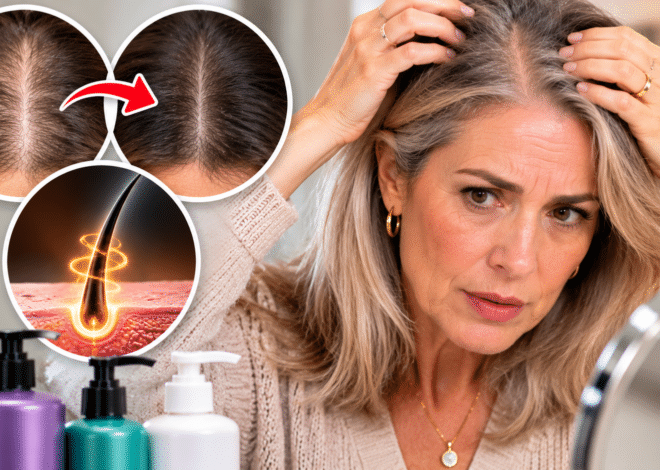
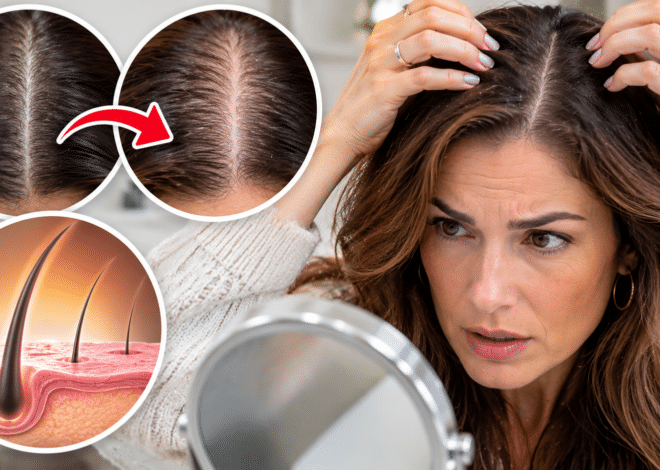
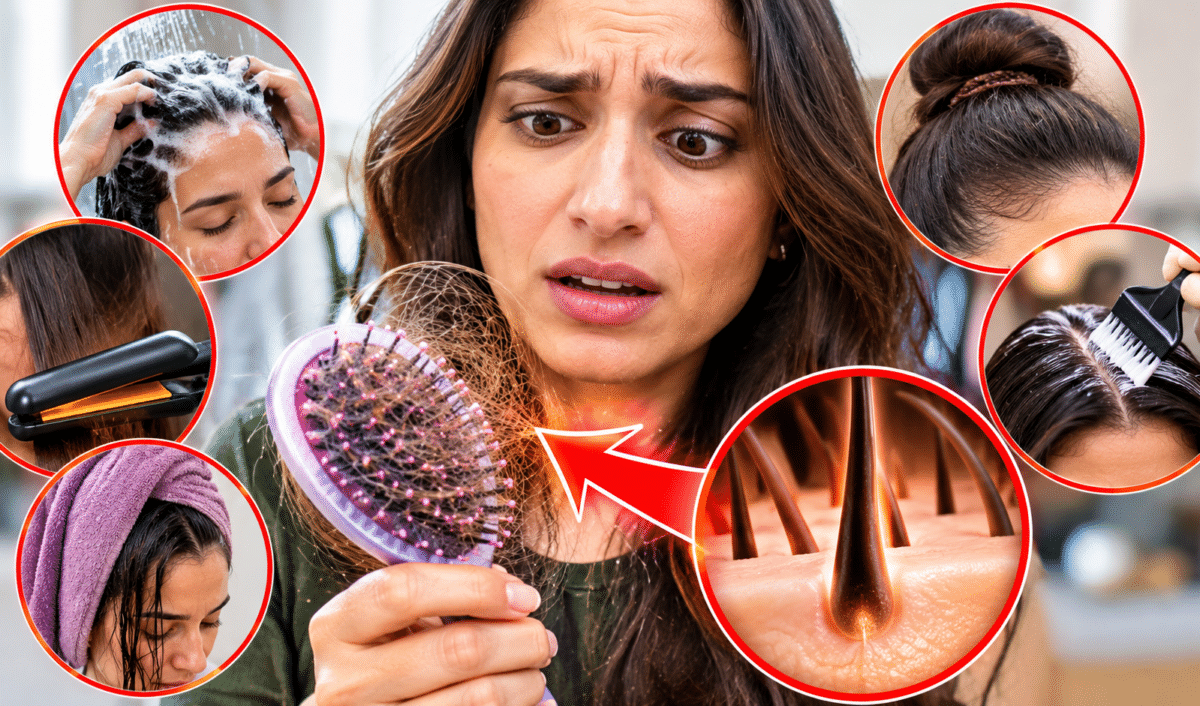
You notice it in small places first. A thicker tangle in the shower drain. Short, snapped pieces on your sweater. A ponytail that wraps around the elastic one more time than it used to. Genetics or stress may be to blame, but a surprising amount of what people call hair fall is actually hair breaking, and the cause is sitting in the bathroom cabinet.
The American Academy of Dermatology keeps a list of 10 everyday habits that damage hair, and warns that damaged hair is fragile, breaks easily and, if the damage continues, can eventually lead to thinning or even bald spots. We grouped those habits and the research behind them into five mistakes. Four of them mainly break the hair shaft, which grows back. One can injure the follicle itself, and that one deserves your attention first.
What We Know
- 1Some shedding is normal. The AAD says it is normal to shed between 50 and 100 hairs a day. Cleveland Clinic gives a range of 50 to 150 and notes thicker hair may shed more.
- 2Daily habits can damage hair. The AAD lists 10 hair-care habits, from rubbing hair with a towel to brushing 100 strokes a day, that can make hair break.
- 3Tight styles can cause lasting loss. The AAD says continual pulling from tightly pulled-back hair can lead to permanent hair loss, called traction alopecia.
- 4Heat damage rises with temperature. A 2011 Annals of Dermatology study found hair dryer damage to the hair surface increased as the dryer moved closer and hotter.
What Is Still Unclear
- A safe heat thresholdResearchers at Purdue University found there is no single temperature where straightening becomes damage, because hair types react differently.
- U.S. traction alopecia numbersMost prevalence studies come from Africa; there are few population-wide figures for the United States.
- Ideal wash frequencyDermatologists give ranges from daily to every two weeks depending on hair type, and studies have mostly tested limited populations.
Shedding, Breakage or Hair Loss? Three Different Problems
Shed hairs come out from the root, usually with a tiny white bulb at the end. They are part of the normal growth cycle. With as many as 100,000 hairs on the scalp, Northwestern Medicine notes, losing 100 a day makes little visible difference.
Broken hairs snap somewhere along the shaft. They are short, uneven and have no bulb. Breakage makes hair look thinner and frizzier at the ends and around the face, but the follicle keeps producing new hair. True hair loss is when new hair stops growing to replace what falls out. That is a job for a dermatologist rather than a new shampoo.
- 100,000Hairs on a typical scalp, Northwestern Medicine
- 6 inchesAverage scalp hair growth per year, AAD
- 80 million+Americans with hereditary hair loss
- 6–9 monthsTypical recovery from excessive shedding, AAD
Excessive shedding has its own name. The AAD calls it telogen effluvium and says it often follows a stressful event such as surgery, a high fever, childbirth or stopping birth control pills. People usually notice it a few months later, and the hair tends to return to normal fullness within six to nine months.
- Month 0Trigger: illness, surgery, birth or major stress
- Month 2Excess shedding often starts after childbirth
- Month 4Postpartum shedding usually peaks
- Months 6 to 9Hair tends to regain normal fullness
- Past 9 monthsStill shedding? See a dermatologist
The Five Habits Quietly Thinning Your Hair
Treating wet hair like dry hair
Water changes hair. A recent paper in the Journal of Cosmetic Science explains that wet hair is more pliable and can be snapped under lesser force, and that healthy hair swells about 10% to 12% in diameter when wet, lifting the cuticle scales slightly. Those raised scales catch on towels and bristles.
The AAD names two wet-hair habits on its damage list: rubbing hair dry with a towel and brushing hair while it is wet. Wrap hair in a towel to absorb water instead of rubbing. If your hair is straight, let it dry a bit before combing gently with a wide-tooth comb. If your hair is textured or tightly curled, the advice flips: comb it while damp, with a wide-tooth comb, because dry coils tangle more.
Running hot tools too hot, too close and too often
In a 2011 Annals of Dermatology study, researchers washed and dried hair samples 30 times using different methods. A dryer held 15 cm away (about 6 inches) heated hair to 47°C, at 10 cm it reached 61°C, and at 5 cm (about 2 inches) it hit 95°C. Surface damage rose with the heat.
Flat irons and curling irons run far hotter. A Journal of Cosmetic Science study notes flat irons operate above 200°C and can significantly damage hair keratin. A later paper in the same journal found that water lowers the temperature at which hair protein breaks down, from 230 to 250°C for dry hair to 120 to 150°C for wet hair. That is a strong reason never to flat iron damp hair.
How hot your hair actually gets
Temperatures in degrees Celsius. Dryer figures from the Annals of Dermatology 2011 study; flat iron and protein breakdown ranges from Journal of Cosmetic Science papers. Bars scaled to 250°C.
The same study produced a twist. Air drying caused the least surface damage but, because hair stayed wet for a long time, it damaged the internal cell membrane complex that holds hair cells together. The authors concluded that a dryer used at 15 cm with continuous motion caused less damage than drying naturally. The AAD’s practical guidance is to air dry when possible, use the lowest heat setting, limit contact time and use hot tools about once a week or less.
| Drying method | Distance | Hair temperature | Drying time | Main damage seen |
|---|---|---|---|---|
| Natural air drying | None | 20°C | Hours | Internal cell membrane complex |
| Dryer, moving | 15 cm (6 in) | 47°C | 60 seconds | Least overall in the study |
| Dryer, closer | 10 cm (4 in) | 61°C | 30 seconds | More cuticle cracking |
| Dryer, very close | 5 cm (2 in) | 95°C | 15 seconds | Most surface damage |
| Flat iron | Direct contact | Over 200°C | Seconds per pass | Keratin protein breakdown |
Pulling hair tight, day after day
This is the one that is different. Tight ponytails, buns, cornrows, braids, weaves and extensions pull on the root, not just the shaft. The AAD says that continual pulling can lead to permanent hair loss. A National Library of Medicine StatPearls review explains that over time the constant tension causes inflammation and shrinking follicles, and in chronic cases permanent scarring. The same review notes that traction alopecia often starts in childhood and may initially be reversible.
The condition is well documented in communities where tight styling is common. A review in Clinical, Cosmetic and Investigational Dermatology reports that traction alopecia affects one-third of women of African descent who wear traumatic hairstyles for prolonged periods. But anyone who wears the same tight ponytail every day can be affected.
Traction alopecia in published studies
Percent of participants with traction alopecia. Community study in southern Nigeria, earlier African studies cited in BMC and PMC reviews, Clinical, Cosmetic and Investigational Dermatology review, and a 2022 north Sudan community study of 192 women.
The AAD advises wearing hair loosely pulled back, using elastics made for styling hair, and changing styles. For weaves and extensions, it recommends lightweight pieces installed at a salon that specializes in them, worn for two or three months at most, with good scalp hygiene throughout.
The pain test
If a new braid, weave or ponytail hurts, stings or causes bumps on the scalp, it is too tight. Loosen it. Caught early, traction alopecia may reverse; years of tension can leave scars where hair cannot regrow.
Washing in ways that rough up the length
Shampoo is meant for the scalp. The AAD’s first damaging habit is rubbing shampoo into the length of your hair. Instead, massage it into the scalp and let it rinse through the ends. Its second is skipping conditioner. The AAD recommends conditioner after every shampoo, and a Journal of Cosmetic Science study of combing found a commercial conditioner reduced both short and long segment breakage.
The other washing mistake is avoiding it out of fear. Washing does not cause hair loss; it just collects hairs that were already shedding. Procter and Gamble data cited by AARP put Americans at an average of 4.6 washes a week. Dermatologists’ advice varies by hair type. Houston Methodist dermatologist Dr. Jennifer Maender says most people should wash two to three times a week. Cleveland Clinic dermatologist Dr. Shilpi Khetarpal says fine hair should be washed at least every other day, and coarse, coiled hair at least every two weeks.
Washing too rarely has its own cost. A 2021 paper in Skin Appendage Disorders noted that sebum left on the scalp turns into irritating fatty acids and oxidized lipids. Its participants, all Asian, were most satisfied with their scalps when washing five to six times a week.
How often to wash, by dermatologist guidance and data
Washes per week. Fine hair figure converts “at least every other day” (Cleveland Clinic); coiled hair figure converts “at least every two weeks”; average from Procter and Gamble via AARP; study from Skin Appendage Disorders 2021. Bars scaled to 6.
Stacking color, bleach, perms and relaxers
Chemical services change the structure of hair, and repeating them on top of each other compounds the damage. The Journal of Cosmetic Science combing research found chemical bleaching increased both short and long segment breakage. Reviews of traction alopecia also note that risk is higher when chemical relaxers are combined with tight styling, because weakened hair is pulled harder.
The AAD’s guidance is specific. Leave more time between touch-ups, aiming for every 8 to 10 weeks or longer, especially in dry winter weather. Get only one chemical service at a time. If you need two, such as a relaxer and color, do the perm or relaxer first and wait two weeks before coloring. Protect processed hair from the sun with a hat or a leave-in conditioner containing zinc oxide.
The Mistake Matrix: Damage, Fix and Timeline
| Mistake | What it damages | Better habit | Number to remember | Reversible? |
|---|---|---|---|---|
| Rough wet handling | Shaft Cuticle, ends | Wrap, do not rub; wide-tooth comb | Hair swells 10% to 12% wet | Yes, grows out |
| Hot tools | Shaft Cuticle, keratin | Lowest heat, dryer moving at 6 inches | Once a week or less | Yes, grows out |
| Tight styles | Follicle Root, scalp | Loose styles, rotate looks | Extensions 2 to 3 months max | Early yes; scarring no |
| Washing errors | Shaft Lengths, scalp | Shampoo scalp, condition every wash | 2 to 3 washes a week for many | Yes |
| Stacked chemicals | Shaft Internal structure | One service at a time | 8 to 10 weeks between; 2-week gap | Yes, grows out |
Worked example: how long damaged lengths take to grow out
- Hair length that is damaged10 inches
- Average growth rate (AAD)0.5 inch per month
- Time to replace fully10 ÷ 0.5 = 20 months
- With a 2-inch trim now8 ÷ 0.5 = 16 months
- Time saved by trimming4 months
Our arithmetic using the AAD’s average growth rate of about half an inch a month. Individual growth varies. The point: breakage is reversible, but it takes well over a year, so stopping the habit today matters more than any product.
Myths That Keep the Damage Going
What people get wrong
- “Brush 100 strokes a day for healthy hair.” The AAD calls this a myth and lists it as a damaging habit. Brush only to style.
- “Washing makes my hair fall out.” Shampooing dislodges hairs already in the resting phase. It does not cause them to shed.
- “Air drying is always gentler.” Long periods of wetness damaged the inner structure of hair in the 2011 drying study.
- “A ponytail is harmless if I take it out at night.” Repeating the same tight style daily is what causes traction alopecia.
When a Routine Change Is Not Enough
Better habits fix breakage. They do not fix hereditary hair loss, thyroid problems, iron deficiency or autoimmune conditions. The AAD says the first sign of hereditary hair loss in women is usually overall thinning or a widening part, and in men a receding hairline or bald spot on top. It adds that early diagnosis and treatment can help stop or slow hereditary hair loss and may help regrow hair.
See a board-certified dermatologist if shedding lasts longer than six to nine months, if you see patches, a widening part or a receding hairline, or if your scalp itches, burns, hurts or develops bumps.
Your Gentle-Hair Checklist
- Shampoo the scalp only; let suds rinse the ends.
- Use conditioner after every shampoo.
- Wrap wet hair in a towel; do not rub.
- Hold the dryer about 6 inches away and keep it moving.
- Use flat or curling irons once a week or less.
- Never flat iron damp hair.
- Rotate hairstyles; loosen anything that hurts.
- Remove extensions within 2 to 3 months.
- Space color or relaxer touch-ups 8 to 10 weeks apart.
- Wait 2 weeks between a relaxer and color.
Frequently Asked Questions
How much hair fall is normal per day?
The American Academy of Dermatology says shedding 50 to 100 hairs a day is normal. Cleveland Clinic gives a range of 50 to 150, with people who have thicker hair shedding more.
Can tight ponytails cause permanent hair loss?
Yes. Continual pulling from tight ponytails, buns, braids and extensions can cause traction alopecia, which the AAD says can become permanent. Early on, it may be reversible if the tension stops.
Is it bad to brush wet hair?
For straight hair, yes. Let it dry a bit before combing with a wide-tooth comb. People with textured or tightly curled hair should comb while damp with a wide-tooth comb.
Is air drying better than blow drying?
Not always. A 2011 study found air drying caused the least surface damage but more internal damage, while a dryer held about 6 inches away and kept moving caused less overall damage.
How often should I use a flat iron or curling iron?
The AAD suggests using hot tools about once a week or less, on the lowest heat setting, and limiting how long the tool touches your hair.
Does washing your hair every day cause hair loss?
No. Washing only removes hairs that were already shedding. How often to wash depends on hair type and oiliness, from daily for oily or fine hair to every one to two weeks for coiled hair.
How long should I wait between hair color and a relaxer?
The AAD recommends getting one chemical service at a time. Relax or perm first, then wait two weeks before coloring, and space touch-ups 8 to 10 weeks or more apart.
Will hair grow back after breakage?
Yes. Breakage affects the shaft, not the follicle, so hair keeps growing at about half an inch a month. Fully replacing damaged lengths can take more than a year.
The Short Version
Much of what looks like hair fall is breakage from wet handling, heat, washing errors and stacked chemical services, and it grows out at about half an inch a month. Tight hairstyles are the exception: they injure the root, and the AAD warns the loss can become permanent. If shedding lasts or patches appear, see a dermatologist.

Omisha is a health writer passionate about turning complex medical research into clear, actionable content readers can trust. She covers everything from nutrition and mental wellness to chronic disease management, always grounding her work in credible science and real-world relevance. When she's not writing, she's usually reading up on the latest health studies or exploring new wellness trends to write about next.