Health · Hair and Aging · Women Over 40
Why Does Your Hair Part Look Wider in Your 40s? Thinner Strands, Shifting Hormones and Early Pattern Loss
Research shows individual hairs get finer after about age 40 to 45, scalp hair density falls with age, and female pattern hair loss, which often starts as a widening center part, becomes more common. Perimenopause can add to the change.
- By the Health and Beauty Desk
- Checked against dermatology journals and MedlinePlus
- Updated November 28, 2026
- Scope: U.S. adults, mainly women 40 to 55
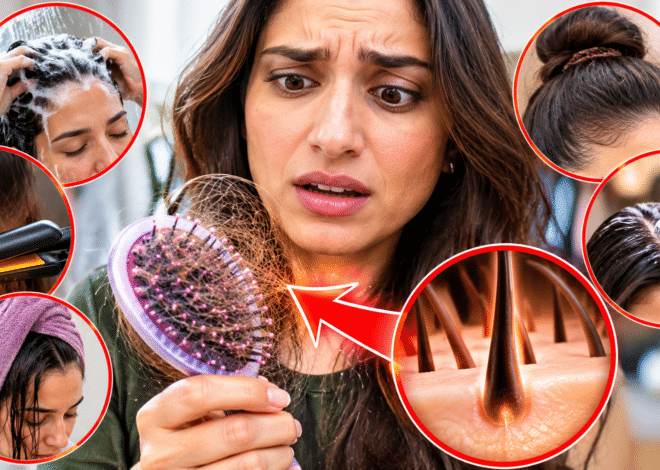
It often happens in a bathroom mirror under bright light. You part your hair the way you always have and notice more scalp than you remember. Maybe a friend’s photo catches the top of your head from above. Your ponytail feels a little lighter. Nothing fell out in clumps, yet the line down the middle of your scalp now looks like a road instead of a path.
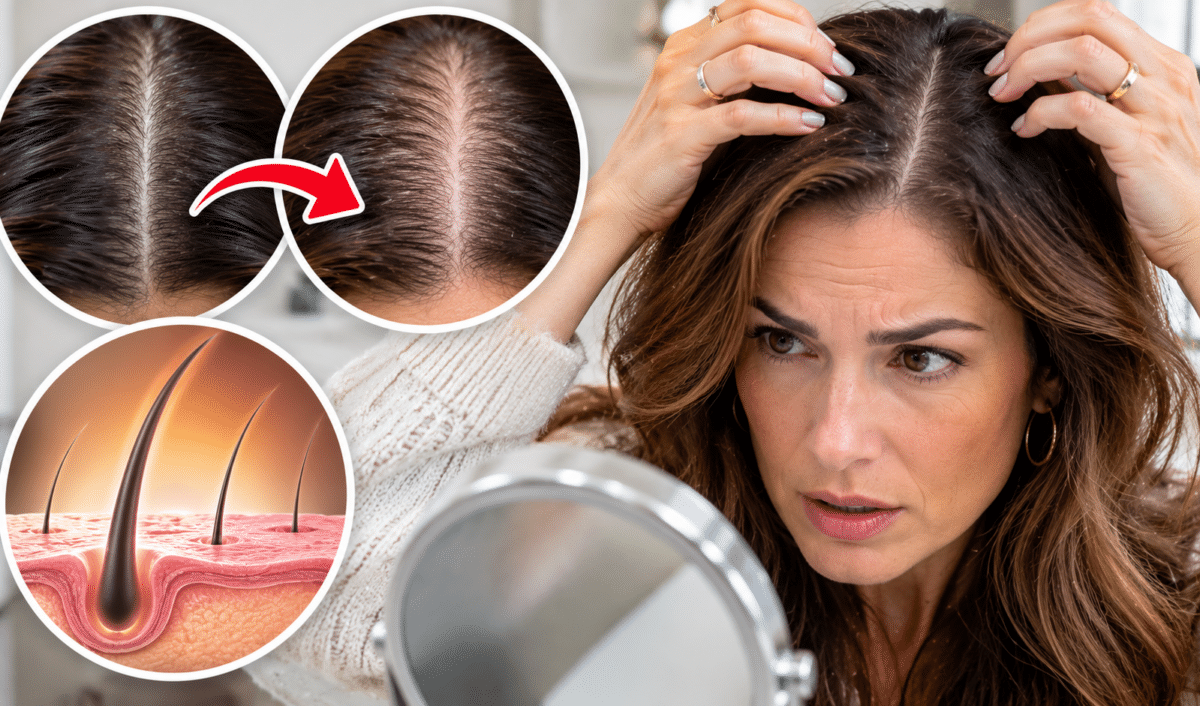
That moment is common in the 40s, and there is a clear biological reason for it. Several changes overlap at once: each hair becomes thinner, fewer hairs grow in the same space, and in many women a genetic condition called female pattern hair loss begins to show along the part. Understanding which is happening matters, because some causes are treatable and the earliest treatment tends to work best.
What We Know
- Strands get thinner after 40. A 2012 British Journal of Dermatology study of more than 1,400 women found parietal scalp hair diameter increased from age 20 to 40 to 45, then decreased.
- Women notice it in their mid-40s. The same study found women perceive a decrease in hair amount in their mid-40s, with a further drop in the mid to late 50s.
- The part is a classic first sign. MedlinePlus says female pattern baldness usually starts with widening through the center part, a pattern called the “Christmas tree” pattern.
- It becomes more common with age. A practice review in the Canadian Medical Association Journal says 12% of women have symptoms by age 29, 25% by 50 and 41% to 50% at 70 and older.
- Perimenopause starts in the 40s. Stanford Health Care says most people begin perimenopause in their 40s, with menopause at an average age of 51.
What Is Still Unclear
- Exact role of estrogenFemale pattern hair loss is often treated as androgen-related, but many women have normal hormone levels, and the link with menopause is not fully understood.
- Data beyond white womenMost large prevalence studies were done in white or East Asian women, so figures may not fit every U.S. population equally.
- Who will progressDoctors cannot yet predict which women with a slightly wider part will go on to more noticeable thinning.
- Best preventionThere is no proven way to stop age-related diameter loss before it begins.
The Thinning You Cannot See Strand by Strand
Hair fullness depends on two things: how many hairs grow per square centimeter, and how thick each hair is. Through your 20s and 30s, both are usually near their peak. That 2012 study of 1,099 women with self-perceived hair loss and 315 without found that hair diameter actually keeps increasing until about age 40 to 45. Then it reverses.
A separate study in the Journal of Cosmetic Science found the same turning point: hair diameter increased until around age 40, then decreased. Dermatology Times summarizes the pattern simply: hair shaft diameter decreases after puberty in men and after age 40 in women.
Density moves too. In a 2001 British Journal of Dermatology study of 377 women, average hair density was 293 hairs per square centimeter at age 35 and 211 at age 70. Put thinner hairs and fewer hairs together and the scalp shows through more easily, most visibly at the part, where hair already divides and lies flat.
Why small changes in strand thickness show up so much
Loss of hair cross-sectional area for a given drop in diameter. Area scales with diameter squared. Our arithmetic; hypothetical values for illustration, not measured averages.
Worked example: density and thickness together
- Density at age 35 (BJD 2001)293 hairs per sq cm
- Density at age 70 (BJD 2001)211 hairs per sq cm
- Density drop over 35 years(293 – 211) ÷ 293 = 28%
- Hypothetical: hairs also 10% thinnerArea per hair x 0.81
- Combined hair coverage remaining0.72 x 0.81 = about 58%
Density figures are from Birch and colleagues; the 10% diameter drop is a hypothetical example and the multiplication is ours. It shows why hair can look much thinner even when you are not losing hair in clumps.
Why the Part Is the First Place It Shows
Female pattern hair loss, the medical name for hereditary thinning in women, works differently from male baldness. In men, loss typically starts at the temples or crown. In women, the front hairline usually stays intact while hair along the top and center of the scalp thins. Cleveland Clinic specialists describe a characteristic “Christmas tree” pattern, with thinning along the midline part that is more prominent toward the front.
The underlying process is called miniaturization. Affected follicles produce progressively shorter, finer hairs. The follicles stay alive, MedlinePlus notes, which is why treatment can still help. Australian dermatologist Rodney Sinclair, who developed the five-stage scale doctors use, has written that fewer than 45% of women go through life with a full head of hair.
| Sinclair stage | What the part looks like | How common | Typical next step |
|---|---|---|---|
| Stage 1 | Normal, narrow part | Only 45% of women aged 80+ remain at stage 1 | No action needed |
| Stage 2 | Slight widening of the center part | Common early sign | Photos every 3 to 6 months; consider dermatologist |
| Stage 3 | Wider part, thinning on both sides | Increases with age | Dermatologist visit; discuss treatment |
| Stage 4 | Diffuse thinning, bald areas toward the front | Less common | Medical treatment likely recommended |
| Stage 5 | Advanced thinning across the top | Least common | Specialist care; possible procedures |
How common female pattern hair loss is, by age
Percent of women affected. CMAJ review; Birch et al., British Journal of Dermatology 2001 (377 women); Norwood, Dermatologic Surgery 2001 (1,006 women); 2013 survey of 26,226 Taiwanese women aged 30+.
Where Perimenopause Fits In
The 40s are also when perimenopause typically begins. Stanford Health Care says estrogen and progesterone levels decline slowly and unpredictably during this transition, which lasts about four years on average and up to 10. Menopause, defined as 12 months without a period, arrives at an average age of 51.
Estrogen is thought to help keep hairs in the growth phase longer, which is one reason hair often feels thicker during pregnancy. As levels fall, Cleveland Clinic notes, estrogen loss can accelerate the thinning many people experience with age. For women already predisposed to pattern hair loss, the hormonal shift may make a widening part more obvious.
- 20s to 30sHair diameter still rising
- Age 35Density about 293 per sq cm
- Age 40 to 45Strand diameter peaks, then declines
- Mid-40sMany women first notice less hair
- Age 51Average age of menopause
- Mid to late 50sA further perceived drop
The menopause transition in years and ages
Stanford Health Care and the U.S. Office on Women’s Health. Bars scaled to age 60.
- 1,414Women in the 2012 hair diameter study
- 4 yearsAverage length of perimenopause
- 30 millionU.S. women with female pattern hair loss, estimate
- Under 45%Women who keep a full head of hair for life
Other Causes That Can Mimic a Widening Part
Not every wider part is pattern hair loss. Doctors look at the pattern, speed and accompanying symptoms to separate causes. CMAJ authors note that a hair-pull test, gently tugging a small bundle of hair, is positive when 6 or more hairs come out easily, which points toward shedding conditions rather than pattern loss.
| Cause | Typical pattern | Speed | Clue or test | Often reversible? |
|---|---|---|---|---|
| Female pattern hair loss | Widening center part, front of crown | Gradual, over years | Pull test negative or mild | Can be slowed, partly reversed |
| Age-related thinning | Overall finer hair | Gradual | Diameter drops after 40 to 45 | No, but styling helps |
| Telogen effluvium | Diffuse shedding all over | Sudden, 2 to 3 months after trigger | Pull test 6+ hairs | Usually yes |
| Iron deficiency | Diffuse thinning | Gradual | Ferritin blood test | Often yes |
| Thyroid disease | Diffuse thinning | Gradual to moderate | TSH blood test | Often yes |
| Traction from tight styles | Along hairline or part | Gradual | History of tight ponytails or braids | Yes if caught early |
When to see a dermatologist sooner
CMAJ authors recommend dermatology referral if the diagnosis is unclear or if hair loss comes with itching, burning or pain, which can signal scarring forms of alopecia that need prompt treatment.
What You Can Do About It
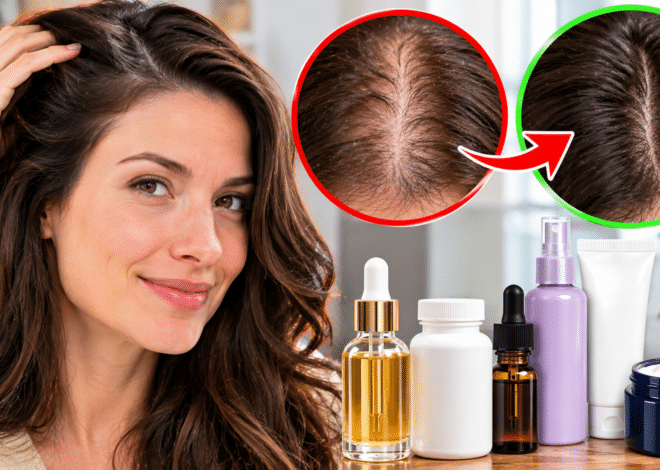
Because female pattern hair loss is progressive, early action matters. Topical minoxidil is approved by the FDA for women’s pattern hair loss. Sinclair’s review notes that an initial response can take 12 to 24 months, and all treatments must be continued to maintain results. CMAJ authors say response typically takes 6 to 12 months and may include a temporary increase in shedding at first. Other options a dermatologist may discuss include spironolactone, low-dose oral minoxidil, platelet-rich plasma and laser devices.
- Slight wideningTake photos under the same light every 3 months to track change.
- Clear wideningSee a dermatologist; ask about topical minoxidil.
- Sudden sheddingCheck for triggers in the past 3 months and request blood tests.
- Itching, burning, painSeek prompt dermatology care to rule out scarring alopecia.
- On treatmentJudge results at 6 to 12 months, not weeks.
Styling tricks that reduce the visible gap
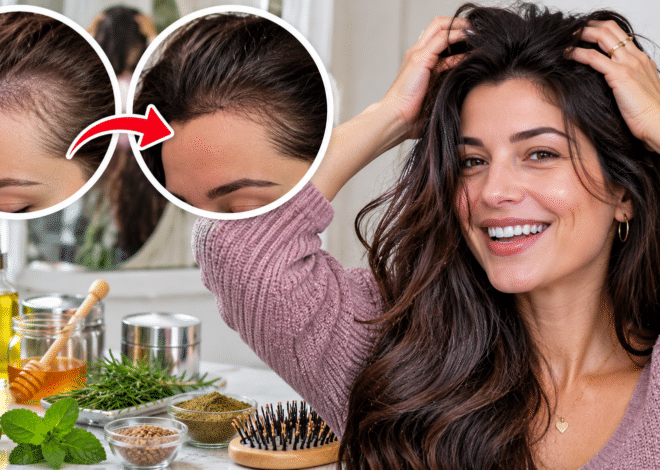
While treatment takes months, small changes can make a part look narrower right away. Shifting the part an inch to one side moves it onto hair that has not been trained to lie flat. A zigzag part breaks up the straight line of scalp. Root-lifting products, gentle blow-drying away from the part and avoiding heavy oils at the roots all add volume. Some women use tinted root powders that match their hair color to reduce contrast with the scalp.
Myths About a Widening Part
What people get wrong
- “If my hair is not falling out in clumps, nothing is changing.” Pattern loss and thinner strands happen quietly, without obvious shedding.
- “Only men inherit hair loss.” Female pattern hair loss affects up to 25% of women by age 50, according to CMAJ.
- “Biotin will fix it.” Supplements help mainly when there is a deficiency; they do not treat pattern hair loss.
- “Treatment works in a month.” Responses typically take 6 to 12 months, and sometimes 24.
- “It must be menopause, so there is nothing to do.” Perimenopause can contribute, but pattern hair loss is treatable.
Your Part-Watch Checklist
- Photograph your part every 3 months in the same light.
- Note sudden shedding lasting more than 2 to 3 months.
- Ask for ferritin and thyroid tests if thinning is diffuse.
- Try moving your part 1 inch to the side.
- Avoid tight ponytails and braids that pull at the part.
- Give any treatment at least 6 to 12 months.
- Seek care quickly for itching, burning or pain.
- Share family history of hair loss with your doctor.
Frequently Asked Questions
Why is my part getting wider in my 40s?
Hair strands usually start getting thinner after about age 40 to 45, density declines with age, and female pattern hair loss often begins as a widening center part. Perimenopause can add to the change.
Is a widening part a sign of female pattern hair loss?
Often, yes. MedlinePlus says female pattern baldness usually begins with widening through the center part. A dermatologist can confirm the cause.
Can perimenopause cause hair thinning?
Yes. Falling estrogen during perimenopause can accelerate age-related thinning, according to Cleveland Clinic. Perimenopause usually begins in the 40s.
At what age does hair start thinning in women?
A large study found women’s hair diameter peaks around 40 to 45, and women begin to notice less hair in their mid-40s. Pattern hair loss can begin earlier, affecting about 12% of women by age 29.
Can a widening part be reversed?
Sometimes partly. The follicles remain alive in pattern hair loss, and treatments such as minoxidil can slow loss and regrow some hair, usually over 6 to 12 months or longer.
What blood tests check for hair thinning?
Doctors may check ferritin for iron levels and thyroid-stimulating hormone when they suspect causes other than pattern hair loss.
How can I make my part look less noticeable?
Move your part to one side, try a zigzag part, add root volume and consider tinted root powders that match your hair color.
When should I see a doctor about a widening part?
See a dermatologist if the part keeps widening, shedding is sudden, or you have itching, burning or pain on the scalp.
The Short Version
Your part may look wider in your 40s because several changes overlap. Research shows women’s hair diameter peaks around 40 to 45 and then declines, density falls from about 293 hairs per square centimeter at 35 to 211 at 70, and female pattern hair loss, which classically starts at the center part, affects about 25% of women by 50. Perimenopause, which usually begins in the 40s, can accelerate thinning. Track changes with photos, rule out iron or thyroid problems, and see a dermatologist early. Treatments like minoxidil can help but take 6 to 12 months to show results.

Omisha is a health writer passionate about turning complex medical research into clear, actionable content readers can trust. She covers everything from nutrition and mental wellness to chronic disease management, always grounding her work in credible science and real-world relevance. When she's not writing, she's usually reading up on the latest health studies or exploring new wellness trends to write about next.