Strength Training Gear2026 Buyer’s Guide
What Are the Best Shoes for Lifting Weights — and When Is a Raised Heel Worth $200?
The right lifting shoe depends on your main lift. Research and 2026 product testing point to raised-heel shoes for squats, flat zero-drop shoes for deadlifts and stable cross-trainers for mixed gym sessions. Soft running shoes come last.
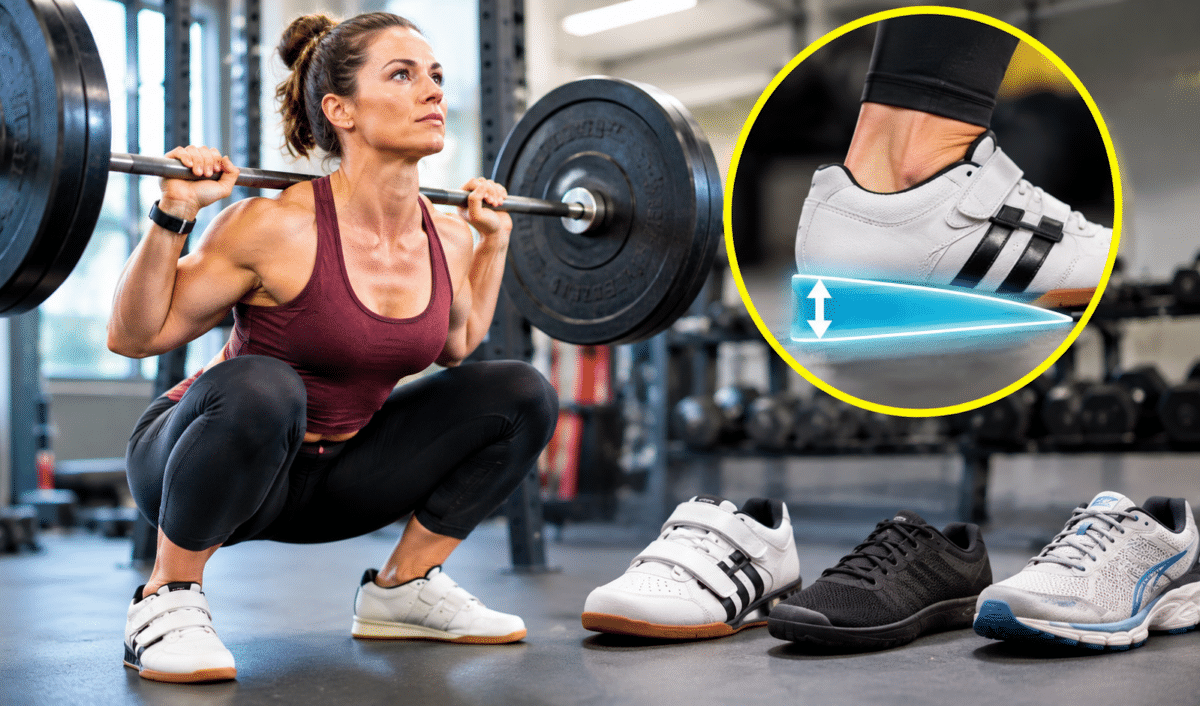
Anatomy of a weightlifting shoe
By The Gym Gear DeskFact-checked against peer-reviewed biomechanics studies and 2026 lab and retailer specsUpdated November 12, 2026Scope U.S. shoppers, prices in U.S. dollars
You have finally committed to lifting. You have a program, a gym membership, maybe a pair of new headphones. And you are standing under a loaded barbell in the same cushioned running shoes you wear for a jog, feeling your heels wobble as the bar gets heavier. Is it your form, or your feet?
Often, it is a bit of both. Footwear changes how force moves from the floor into the bar, how far your knees can travel and how upright your torso stays. The good news is that the “best” lifting shoe is not one shoe. It depends on which lift you care about most, and the right choice can cost anywhere from about $75 to $230, or nothing at all if you lift in socks.
What We Know
- Raised heels generally reduced forward trunk lean and center-of-pressure sway during squats.
- A 2017 study found weightlifting shoes improved squat mechanics versus running shoes, more so for experienced lifters.
- Squatting on a soft foam surface cut force production by 7% to 10% in a 2014 study.
- Most dedicated weightlifting shoes have an effective heel of about 0.6 to 1 inch.
What Is Still Unclear
- Most studies measure immediate effects in small groups, not long-term injury or strength outcomes.
- The ideal heel height likely varies with ankle mobility, limb length and squat style.
- Some studies found little difference with a raised heel, especially in novice lifters.
- Brands measure heel height differently, so listed specs are not always comparable.
Four Shoe Types, Four Different Jobs
Lifting shoes fall into four broad categories. Each solves a different problem, and the right one is the one that matches the lift you prioritize. Many experienced lifters own two pairs.
Why a Raised Heel Changes Your Squat
To squat deep, your knees need to travel forward over your toes, which requires ankle flexibility. If your ankles are tight, your body compensates by leaning your torso forward or cutting depth short. A raised heel lets your shin angle forward without needing as much ankle bend. Charlton and colleagues reported in 2017 that a raised heel reduced forward trunk lean at the bottom of the squat. For front squats, high-bar squats and Olympic lifts, which demand an upright torso, that matters a great deal.
Why Deadlifters Want the Opposite
The deadlift starts with the bar on the floor and ends with you standing tall. A raised heel effectively makes you taller at the start and can shift your balance forward. RunRepeat’s science guide recommends flat-soled, zero-drop or barefoot-like shoes for conventional deadlifts, and flat shoes with more side support for wide-stance sumo deadlifts. The thinner the sole, the shorter the distance the bar has to travel.
What the Research Actually Shows
Footwear research for lifting is smaller than most fitness marketing suggests, but it is consistent on the big points. The most comprehensive recent analysis, published in Applied Sciences in February 2025 by Duan and colleagues, pooled 14 studies comparing heel heights from 0 to 30 mm during squats.
The review found elevated heels generally reduced center-of-pressure deviation, a measure of how much your balance shifts, and reduced trunk lean. A heel of 25 mm ranked best for front-to-back stability, and 25 mm also ranked first for side-to-side stability, followed by 15 mm. The authors cautioned that the ideal height depends on individual factors such as ankle mobility and trunk flexibility, and that most studies only measured immediate effects in adults aged about 20 to 40.
Heel Heights Tested in Squat Research
Signs Your Current Shoes Are Holding You Back
A few warning signs suggest footwear is part of the problem. Your heels rise off the floor at the bottom of a squat. Your feet roll inward or outward as the weight gets heavy. You feel the sole squish or tilt when you push out of the hole. Or your torso pitches forward even though your back and hips feel strong. Any of these can also come from mobility or technique, so film a set from the side before blaming the shoes.
A simple test helps. Squat with an empty bar in your current shoes, then repeat with small weight plates or a wedge under your heels. If depth and torso position clearly improve with the heel lift, a weightlifting shoe is likely to help. If nothing changes, spend the money on coaching or mobility work first.
Shoes Versus Barefoot Versus Running Shoes
Other studies fill in the picture. Legg and colleagues found in 2017 that weightlifting shoes improved nearly every aspect of the squat compared with running shoes in 32 participants, and the benefits grew with lifting experience. Sinclair’s 2015 study found running shoes allowed more squat depth and knee bend than barefoot. Southwell’s 2016 work showed knees rotated slightly differently in lifting shoes versus barefoot. Lee’s 2017 study found no differences with a raised heel, possibly because its volunteers were less experienced.
The 2026 Shoes Worth Knowing
Heel heights below come from Garage Gym Lab’s January 2026 testing and RunRepeat’s March 2026 lab measurements. Brands and reviewers measure differently, so treat a millimeter or two of difference as noise.
Effective Heel Height by Shoe
The Premium Lifters
The Reebok Legacy Lifter III, Nike Romaleos 4 and Adidas Adipower 3 are the shoes most reviewers rank at the top. RunRepeat’s lab rated both the Romaleos 4 and Legacy Lifter III at 5 out of 5 for torsional rigidity, with midsole firmness readings near the top of its scale. The Legacy Lifter III weighed 22.1 ounces per shoe in its testing, heavy by design. Garage Gym Lab flags the Romaleos 4 as a better fit for narrow feet and the TYR L-1 for wide feet.
The Budget and Specialist Picks
The Adidas Powerlift 5 is the most common recommendation for beginners, with a lower 15 mm heel. RunRepeat listed it at $120 and FitnessVolt at a $130 list price. Do-Win’s classic lifter has a heel of about 19 mm. For deadlifts, the Adidas The Total is a true zero-drop shoe weighing 11.5 ounces with a 12.5 mm sole. Cross-trainers such as the Nike Metcon 10 and Reebok Nano line sit in between.
Listed Prices for Popular Lifting Shoes
Sale prices can be much lower. FitnessVolt found the Powerlift 5 for $85 and the Do-Win for $75 at the time of its check, and the TYR L-1 on sale for $99. Prices change frequently, so compare retailers before buying.
Matching the Shoe to Your Training
This decoder covers every common footwear choice in the gym. Heel figures are from the sources above; the “best for” ratings are editorial judgments based on the research.
| Footwear | Heel or drop | Squats | Deadlifts | Mixed workouts | Typical price |
|---|---|---|---|---|---|
| Premium weightlifting shoe | 20 to 22 mm | Best | Avoid | Poor | $200 to $230 |
| Budget weightlifting shoe | 15 to 19 mm | Very good | Avoid | Poor | $75 to $130 |
| Cross-trainer | 6 to 8 mm | Good | Good | Best | Varies by model |
| Zero-drop deadlift shoe | 0 mm | Fine for low-bar | Best | Limited | Varies |
| Barefoot or socks | 0 mm | Fine if mobile | Very good | Gym rules vary | $0 |
| Running shoe | Soft, cushioned | Not advised | Not advised | Cardio only | Already owned |
Easing Into Raised Heels
Switching to lifters changes your mechanics, so give your body a few weeks to adjust. The plan below is indicative and based on common coaching practice rather than a specific study.
- Week 1Warm-up sets onlyFeel the new balance point with light loads.
- Week 2Working sets at 70 to 80%Recheck depth and knee tracking.
- Week 3Full sessionsSquats, front squats and Olympic lifts.
- Week 4Heavy singlesCompare to your old shoes on video.
How to Choose and Fit Lifting Shoes
Fit matters as much as features. A lifting shoe should feel snug and locked down, with no heel slip. These steps help narrow the field.
- Name your main liftSquats and Olympic lifts point to a raised heel; deadlifts point to flat; mixed training points to a cross-trainer.
- Check your ankle mobilityIf your heels lift or your torso pitches forward in a body-weight squat, a raised heel may help.
- Pick a heel heightBeginners often start around 15 mm; most premium lifters sit at 20 to 22 mm.
- Match the shoe to your foot widthReviewers rate the TYR L-1 for wide feet and the Nike Romaleos 4 for narrow feet.
- Fit snug, not tightYour toes should not hit the end, and your heel should not lift when you rise onto your toes.
- Keep them for lifting onlyWalking or running in rigid lifters is uncomfortable and wears the soles.
When You Might Not Need Special Shoes
Plenty of strong people lift in flat canvas sneakers, wrestling shoes or socks. If you mainly low-bar squat and deadlift, have good ankle mobility and train at a gym that allows it, flat and thin may be all you need. RunRepeat’s guide notes barefoot lifting increases foot muscle activation and feedback, though it offers no protection from dropped weights. Check your gym’s footwear rules first.
- Squats: 15 to 22 mm heelRigid, flat outsole
- Deadlifts: 0 mm dropThin, flat sole
- Mixed training: cross-trainerAbout 6 to 8 mm drop
- Skip soft running shoesFoam cut force 7% to 10%
- Budget: $75 to $130Powerlift 5, Do-Win
- Premium: $200 to $230Legacy Lifter, Romaleos, Adipower
Frequently Asked Questions
What shoes are best for lifting weights?
It depends on the lift. Raised-heel weightlifting shoes suit squats and Olympic lifts, flat zero-drop shoes suit deadlifts, and stable cross-trainers suit mixed gym workouts.
Are running shoes bad for lifting weights?
For heavy lifts, yes. Soft cushioning reduces stability, and a 2014 study found squatting on a foam surface cut force production by 7% to 10%.
What heel height is best for squatting?
Most weightlifting shoes have 15 to 22 mm heels. A 2025 review of 14 studies ranked about 25 mm best for squat stability, but the ideal depends on your ankle mobility.
Should you deadlift in weightlifting shoes?
Generally no. The raised heel adds height and shifts you forward. Flat, thin, zero-drop shoes or socks are usually better for deadlifts.
Are weightlifting shoes worth it for beginners?
If you squat regularly and have tight ankles, a budget lifter around $75 to $130 with a 15 mm heel is a reasonable start. Benefits tend to grow with experience.
Can you lift weights barefoot?
Many lifters do, especially for deadlifts. It increases foot feedback but offers no protection from dropped weights, and many gyms do not allow it.
Are Converse good for lifting?
Flat canvas sneakers like Converse have thin, firm soles that work well for deadlifts and low-bar squats, though they offer no heel lift and limited support.
How much do weightlifting shoes cost?
List prices for popular 2026 models range from about $125 to $230, with sale prices on budget pairs as low as $75 to $99.
The Short Version
The best lifting shoe depends on your main lift. For squats and Olympic lifts, choose a rigid weightlifting shoe with a 15 to 22 mm heel; a 2025 review of 14 studies found raised heels reduced trunk lean and improved stability. For deadlifts, go flat and thin. For mixed training, choose a stable cross-trainer. Avoid soft running shoes under a heavy bar. Premium lifters cost $200 to $230 and budget options $75 to $130. Fit snug, ease in over a few weeks and keep them for lifting.

Omisha is a health writer passionate about turning complex medical research into clear, actionable content readers can trust. She covers everything from nutrition and mental wellness to chronic disease management, always grounding her work in credible science and real-world relevance. When she's not writing, she's usually reading up on the latest health studies or exploring new wellness trends to write about next.